Holmes
The Holmes family made their home in Pulaski, Virginia, where W. O. Holmes Sr. labored on the railroad and nurtured a deep conviction for education and community. In 1947, he signed his daughter Jean Holmes onto the Corbin et al. v. County School Board of Pulaski County (1947), underscoring his belief that access to education mattered for more than just his child—it mattered for their whole neighborhood. Jean went on to graduate, teach, and serve her community, passing down that same commitment to service and learning to her daughter, Zeborah “Zebbie” Holmes who worked as a nurse in Pulaski, Virginia. Rooted in faith at New Century Methodist Church and grounded in self-sufficiency through gardening, the Holmes family continues to shine as a legacy of perseverance, care, and community uplift.
Explore the quilt by clicking on the various elements
For best user experience, use full screen mode
An interactive graphic of the quilt square. The linked information can also be found below.
The Holmes quilt block uses layered fabrics and symbols to reflect the family’s foundations in faith, education, and community. Each element is intentionally arranged to highlight key moments in the Holmes family story—milestones, movements, and the values that guided their lives.
Learn More About the Holmes Family
Artifacts by Theme
Education
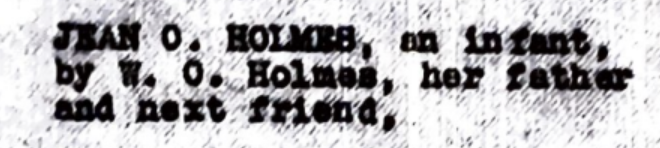
Named participant List on Lawsuit
Jean O. Holmes was signed on to the Corbin et. al. v. Pulaski County School Board et. al. case by her father, William o. Holmes. Signed on when she was about to graduate high school, Jean Holmes had a precedent set by her father early on in her life that highlighted the importance of education and prioritizing community. Attaching the family name onto this lawsuit was just one of the many ways how W.O. Holmes prioritized his children’s education and their wellbeing.
Torch and Book
In the Holmes family, school and education were prioritized for the children of W.O. Holmes Sr., which was then passed down to his granddaughter, Zebbie Holmes. Jean Holmes was the only daughter of W.O. Holmes Sr., who was pushed by her father to continue striving to obtain an education by first signing her name onto the 1947 Corbin et. al. v. Pulaski County School Board et. al. court case, and pushing her to graduate from Christiansburg Industrial Institute in 1947.1 Jean graduated from Morristown College in Tennessee and worked in the Pulaski County School District for some time, furthering her commitment to education by working for the school district.2 Jean Holmes Brown’s success in education despite the many difficulties and challenges faced by black Americans in the segregationist South inspired her daughter Zeborah “Zebbie” Holmes to further her education beyond high school and pursue a career in nursing. Throughout the lives of the Holmes family, education played an essential role in the family dynamic as education was stressed as a means to be self-reliant and sufficient, as well as a method of proving Black excellence and intelligence.
Faith and Religion:
Tithe Bowl and Communion Trays
Many generations of the Holmes family were deeply involved in their Methodist faith. Both William Oakley Holmes Sr. and Jr. were active New Century Methodist Church members. W.O. Holmes Jr. was an usher for New Century Methodist Church and Randolph Avenue United Methodist Church for over 50 years.3 Many men in the family were also members of the “United Methodist Men”, an organization that focuses on the growth of men’s relationship with Christ, which was formally established in 1968.4 W.O. Holmes Sr.’s brother, George Holmes, also served as an usher and frequently carried the communion trays to and from the altar. The family’s strong connection to the church is reflected in the quilt, which includes communion trays and a tithe bowl, items that honor the members of the family who served as ushers, and the importance of faith in their lives.
Luke 8:5
In the top left of the Holmes quilt square is verse Luke 8:5 from the Christian bible, which says “a farmer went out to sow his seed. As he was scattering the seed, some fell along the path.” This verse focuses specifically on how people receive God’s words, with some seeds falling on the farm land, which produced a fertile harvest, and others falling along the path, which were trampled and eaten by birds. The church was a central unifying factor in the family as the children all received God’s word and took their Methodist faith into their minds and hearts as it was introduced to them by their parents and elders. William Oakley Holmes Jr. was a clear example of this, as his father’s and uncle’s presence in Pulaski’s New Century Methodist Church led to a lifelong commitment to being an usher at the New Century Methodist Church and the Randolph Avenue Methodist Church.5 The seeds dropped by the earlier generations of the Holmes family were sown from one generation to the next as the children and descendants continued the legacy of Methodist faith in their own lives.
Artifacts by Family Member
William Oakley Holmes Sr.
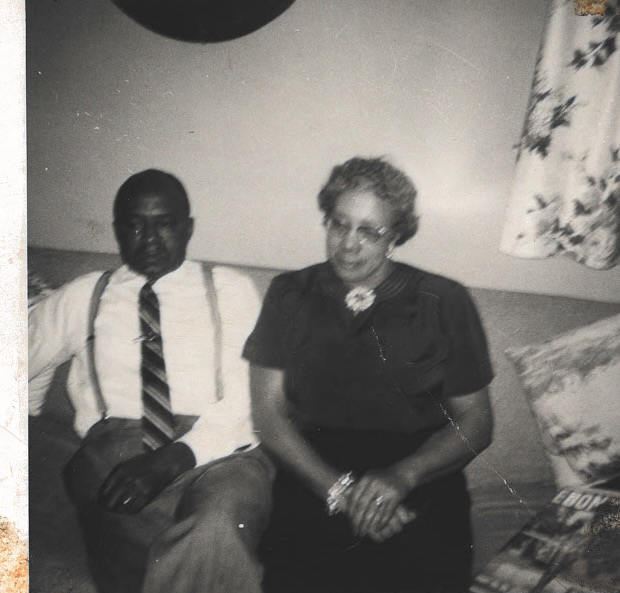
Born on December 22, 1893, William Oakley Holmes Sr. was the son of Henrietta Holmes and grew up in Pulaski County, Virginia.6 For most of his life, W.O. Holmes Sr. worked as a mail carrier on the Norfolk and Western Railroad. In his first marriage to Alice Blakey Holmes, he had two children, a daughter Jean Holmes and a son William Oakley Holmes Jr. Widowed after Alice’s passing just six days after the birth of their son, W.O. Holmes Sr. would eventually remarry to Frances Holmes who took on the role of step-mother to Jean and William Oakley Jr.7 Throughout his life, W.O. Holmes Sr. was a devoted Methodist as a member of the New Century Methodist Church in Pulaski and prioritized the importance of education onto his children. By encouraging both of his children to continue to be active members of the local Methodist churches, encouraging them to take their education seriously, becoming a part of the Corbin et. al. v. Pulaski County School Board et. al. case, W.O. Holmes Sr. was highly influential in the lives of his children, as well as the lives within his community.
Train:
Directly showing his career and method of providing for his family, a line drawn image of a trail is shown steaming down the railroad tracks to symbolize W.O. Holmes Sr.’s commitment to his job, and commitment to his family. Throughout the early to mid 20th century many Black men in southwest Virginia worked for Norfolk and Western Railroad with a major hub of employment for the company being in Roanoke, Virginia.8 For many Black men all around Southwest Virginia, working for the railroad gave a sense of higher pay compared to other jobs in the area. Working for N&W as a Black man in the 1910s to 1940s was a job that was well respected within the community and “…allowed many Black workers to purchase a home and send their children to college.”9 While pay and conditions were often better than a lot of other sources of income for Black men in the early 20th century, working for the Railroad still came with the same racial discrimination seen throughout many southern workplaces such as position and raise discrimination, along with segregated facilities and work units. The imagery of a train rolling down its tracks is meant to symbolize W.O. Holmes Sr.’s work on the railroad, paying homage to his career and contribution to the family’s livelihood.
Number “42”
While working for the Norfolk and Western Railroad, family lore suggests that the number “42” was central to William O. Holmes Sr.’s work, often referred to as “the number 42 for the train.”10 The number “42” may have once been a common colloquialism related to Norfolk Southern Railroad, or the number of the specific train William often worked on. The number “42” stitched into the design of the Holmes quilt square to symbolically represent his job as a N&W Railroad worker as a means to support his family, along with sayings and phrases commonly used within the family that show the tightly knit Holmes family.
Tomatoes and Onions
Among his many hobbies, W.O. Holmes Sr. was also a dedicated gardener, tending to vegetables such as green beans, tomatoes, and onions. This aspect of his life is symbolized in the family quilt where elements of gardening, particularly tomatoes, are included to honor his contribution to the family’s self-sustenance and connection to the earth. Many Black families during this time who lived in more rural localities relied on self-sufficiency through growing their own food as a means to support oneself and family. Farming for Black Americans has been a way to survive and build community while resisting the systemic oppression that has historically limited their economic opportunities.11 This theme represents W.O. Holmes’ passion for gardening and ties back to the family’s values of self-sufficiency and connection to nature. Elements such as tomatoes and onions are included to reflect the produce W.O. Holmes Sr. grew and nurtured.
Jean Holmes Brown
Born on April 27th, 1930, Jean Holmes Brown was the first of two children born to W.O. Holmes Sr. and Alice Blakey Holmes in Pulaski, Virginia.12 Attending the Calfee Training School in Pulaski and Christiansburg Industrial Institute in Christiansburg, Jean Holmes prioritized her educational career at an early age. After graduating from CII, Jean Holmes received her degree from Morristown College in Tennessee in 1949 and lived for a few years in Cincinnati upon graduation. Upon her return to Pulaski, Jean Holmes became an active member of the Corbin branch of the YMCA from its opening, serving as an evening supervisor and later as chairman of the board.13 She was also deeply involved in the community through her work at Pulaski County Middle School, where she supported children with disabilities. In addition to her outstanding community service also worked diligently to provide for her family and also sported a position at The Powers Food Fair 14 . While raising her daughter Zeborah “Zebbie: Holmes, Jean Holmes Brown was able to instill the same lessons and values taught to her by her father onto Zebbie Holmes, such as the importance of education.
Graduation Cap and Gown
Jean Holmes graduated from CII in the spring of 1947.15 The image on the right depicts Jean Holmes in her Graduation regalia from her time at Morristown College. This image of Jean Holmes, shown in her graduation cap and gown, symbolizes the family’s reverence for learning and academic achievement. The value of education in the lives of the Holmes family was passed down through generations, starting with W.O. Holmes’ commitment to fight for his children’s quality and access to education, and continues on with Zebbie Holmes’s legacy with her nursing career. Jean Holmes Brown pushed her daughter Zebbie Holmes to pursue higher education, which serves as a testament to the emphasis on education and perseverance placed on Holmes family members and descendants.
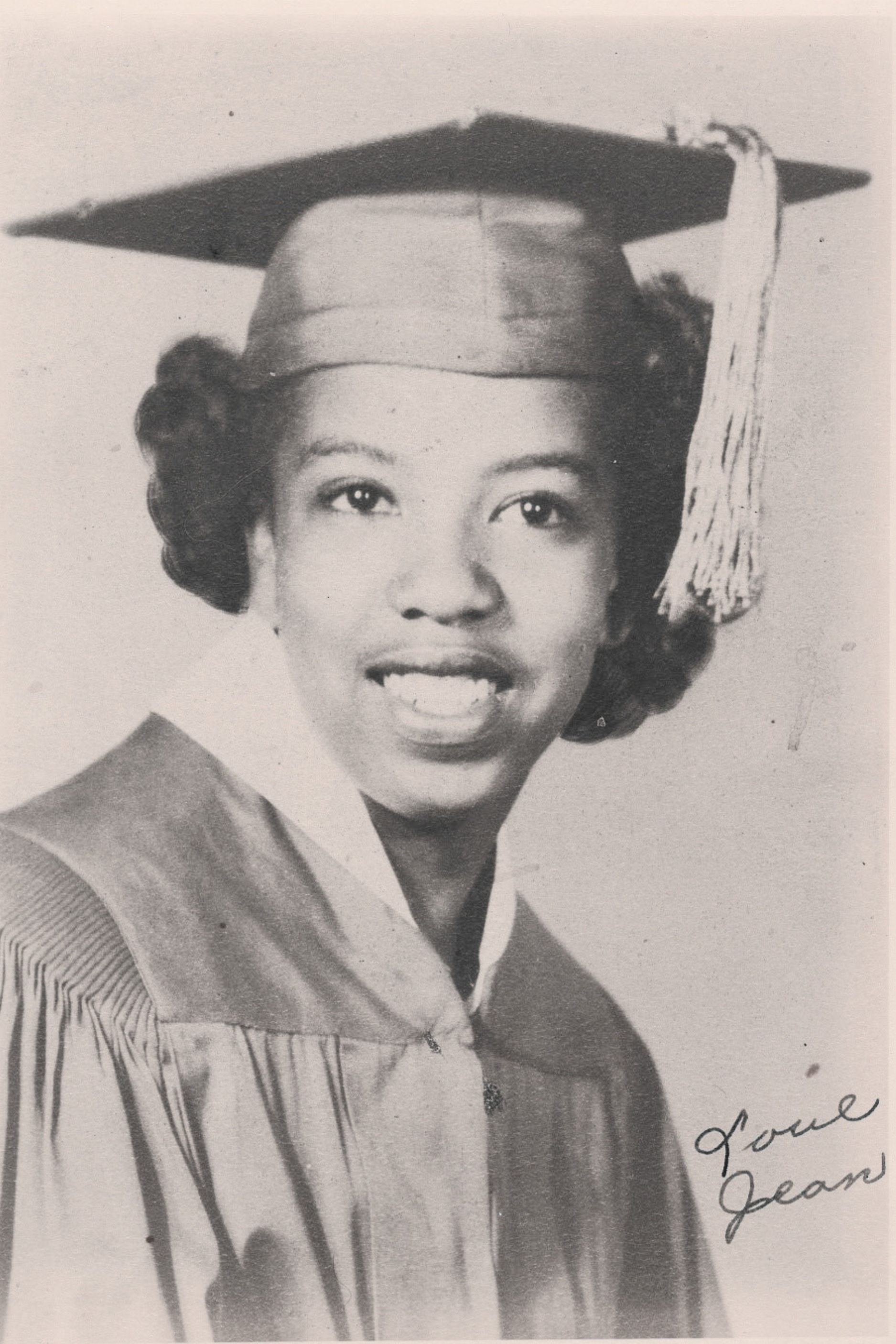

Photo In Front of Calfee
Squatting in the front row of a Calfee class photo is Jean Holmes dressed in her long plaid skirt and white collared shirt. While Jean Holmes went on to achieve high levels of academic success, her educational experience started at the Calfee Training School in Pulaski, Virginia. Remembered by many alumni of the Calfee Training School, Calfee was a place where students came to learn, grow, and prepare themselves for the next steps ahead in life. For many Calfee graduates, that was furthering their education at CII; for some, that was going straight into the workforce, but for all, it was an experience that shaped each student on an interpersonal level. Without the time and experience at the Calfee Training School, Jean Holmes would not have been able to further her educational experience by attending CII and Morristown College, nor would she have been able to pass down the value of education to her daughter Zebbie Holmes.
Zeborah “Zebbie” Holmes
Zeborah “Zebbie” Holmes, daughter of Jean Holmes and granddaughter of W.O. Holmes, is a significant figure in the Holmes family who holds the same values of education, faith, and community close. Becoming a nurse, Zebbie Holmes was able to graduate from nursing school in the 1980s. This achievement was heavily influenced by her mother’s insistence on the importance of education and support, but a consistent push was given to Zebbie to go beyond a high school education. Seeing the photos of her mother’s accomplishments through her graduation portraits or her community involvement, Zebbie was influenced by her mother to pursue a challenging, rewarding, and essential career in the nursing field. Education remains a core value within the Holmes family, symbolically placed at the heart of the quilt to show its importance within the family.
Frances Johnson Holmes
Second wife of W.O. Holmes Sr., records show Frances’s importance within the family network. Taking on the role of step-mom to both W.O. Holmes’ children, Jean and William Oakley Holmes Jr., Frances Holmes raised the children for at least a decade as her own. The 1940s census shows that Frances’s highest level of education was completed in two years of college, which was a likely reason why Jean Holmes was able to find such success in her college years and graduation.16 Her inclusion in the quilt demonstrates the interconnectedness and unity of the Holmes family, showcasing the broader community ties that were part of the family’s fabric.

William Oakley Holmes Jr “Brother”.
William Oakley Holmes Jr. aka “Brother” was born on March 26th, 1932, to parents W.O. Holmes Sr. and Alice Blakey Holmes. Oakley was deeply involved in his community, despite facing the challenges of epilepsy.18 A devoted member of New Century Methodist Church and Randolph Avenue Methodist Church, Oakley Jr. was a prominent member of his community who was highly respected as an usher. According to his obituary, he received a citation from President Bill Clinton for his volunteer work for the SHARE Program in Pulaski, which caused him to be featured on Roanoke WDBJ’s “Hometown Hero” segment to highlight his contribution to the community of Pulaski.19 This commitment to community service and perseverance in the face of challenges highlights his resilience and the strong familial support he received from his parents, sister, and the rest of the Holmes family.
Alice Blakey Holmes
Alice Blakey Holmes was W.O. Holmes Sr.’s first wife and the mother to their two children, Jean Holmes Brown and William Oakley Holmes Jr. She died just six days after the birth of William Oakley Holmes Jr. due to complications likely related to his birth.20
Gretchen Holmes
Third wife of W.O. Holmes Sr., Gretchen Holmes married W.O. Holmes in 1957. Although the couple did not have children together, Gretchen played a significant role in the lives of many children in Pulaski through her work as a first-grade teacher at Calfee Training School, where she taught for many years. Her impact as an educator endured long after the classroom, with former students remembering her for bringing music into their lessons and for her dedication to teaching them to read and write well. Outside of the classroom, she was an active member of the broader Pulaski County community, including her involvement with the Gem City Garden Club.
Sources
- Carter, Ethel.”Colored News, Pulaski Students.” The Southwest Times. June 8, 1947. page 2. Accessed Virginia Chronicle https://www.virginiachronicle.com/ ↩︎
- “Area Deaths, Jean H, Brown.” The Southwest Times. November 20, 1992. page 2. Accessed Virginia Chronicle https://www.virginiachronicle.com/ ↩︎
- “Deaths, William O. Holmes.” The Southwest Times. November 18, 1965. page 3. Accessed Virginia Chronicle https://www.virginiachronicle.com/. Find a Grave. “Memorial page for William Oakley “Brother” Holmes Jr.” Memorial ID 64601874. Pinehurst Cemetery, Pulaski. Maintained by Michael Blankenship. Accessed October 10, 2025. https://www.findagrave.com/memorial/64601874/william-oakley-holmes#source ↩︎
- “UMM History.” The United Methodist Church. Accessed October 10, 2025. https://www.nyac.com/ummhistory#:~:text=The%20present%20history%20of%20United,Brotherhood%20organized%20by%20John%20Wesley. ↩︎
- “Memorial page for William Oakley “Brother” Holmes Jr.” Find a Grave. ↩︎
- Commonwealth of Virginia Certificate of Death for William Oakley Holmes Sr., November 23, 1965, Pulaski, Virginia. Accessed http://www.ancestry.com. ↩︎
- Commonwealth of Virginia Certificate of Death for Alice Blakey Holmes. “Memorial page for William Oakley “Brother” Holmes Jr.” Find a Grave. ↩︎
- “N&W Railway Becomes a Source of African-American Jobs.” The Gainsboro History Project. Accessed October 10, 2025. https://gainsborohistoryproject.org/chapters/chapter-3. ↩︎
- “N&W Railway Becomes a Source of African-American Jobs.”The Gainsboro History Project. ↩︎
- “Conversation with Zebbie Holmes.” 23/54 Quilt Workshop. Fine Arts Center for the New River Valley, Pulaski Virginia. November 16, 2024. ↩︎
- King, Katrina, Spencer Wood, Jess Gilbert, Marilyn Sinkewicz. “Black Agrarianism: The Significance of African American Landownership in the Rural South.” Rural Sociology. January 2018. 680. ↩︎
- “Area Deaths, Jean H, Brown.” The Southwest Times. November 20, 1992. page 2. Accessed Virginia Chronicle https://www.virginiachronicle.com/ ↩︎
- “Corbin Y Branch Kicks off it Membership Drive.” The Southwest Times. March 16, 1958. page 4. Accessed Virginia Chronicle https://www.virginiachronicle.com/ ↩︎
- “Area Deaths, Jean H. Brown.” The Southwest Times, November 20, 1992, page 2. ↩︎
- Carter, Ethel.”Colored News, Pulaski Students.” June 8, 1947. ↩︎
- Department of Commerce–Bureau of the Census. Sixteenth Census of the United States. Pulaski, Virginia. Enumerated April 20, 1940. Sheet no. 9A. Entry for William O. Holmes. Accessed http://www.ancestry.com. ↩︎
- “Memorial Page for William Oakley “Brother” Holmes Jr.” Find a Grave. ↩︎
- “Memorial Page for William Oakley “Brother” Holmes Jr.” Find a Grave. ↩︎
- “Memorial Page for William Oakley “Brother” Holmes Jr.” Find a Grave. ↩︎
- Commonwealth of Virginia Certificate of Death for Alice Blakey Holmes. April 3, 1932, Pulaski, Virginia. Accessed http://www.ancestry.com. ↩︎
 23/54 PROJECT