
Hunt
The Hunt family made their home in Draper, Virginia, where Robert James Hunt worked for the Works Progress Administration (WPA), in a glass factory, and in the mines, despite having had only a first-grade education and remaining unable to read or write for most of his life. Although the specifics of his work with the WPA are not known, Robert’s determination to provide for his family shaped the path for his children, who carried his values of perseverance and ambition forward — including Rosetta Hunt (born 1934), who led the student newspaper at Calfee Training School and later worked at the Radford Army Ammunition Plant, and Sallie Hunt (born 1937), who served as a class officer at Calfee and went on to become a nurse after attending Virginia State College. In 1947, Robert signed his daughters Rosetta and Sallie onto the Corbin et al. v. County School Board of Pulaski County (1947) lawsuit, determined to secure the educational opportunities he himself had been denied. The Hunts’ story reflects a legacy of hard work, learning, and determination that continues through their descendants.
Explore the quilt by clicking on the various elements
For best user experience, use full screen mode
An interactive graphic of the quilt square. The linked information can also be found below.
The overarching theme of this quilt square is familial success and perseverance. The quilt’s overall image represents a sun, with its rays formed by various strips of fabric. The family selected the colors they felt were the most aesthetically pleasing. The sun symbolizes Robert Hunt (the father), while the rays represent the children’s success, specifically Sallie and Rosetta Hunt.
Learn More About the Hunt Family
Artifacts by Family Member
Robert Hunt
Summary
Robert James Hunt was born on June 20, 1905 to parents Ben and Jettie Hunt in North Carolina.1 Robert was an incredibly hardworking man, providing for his family by working several jobs in his lifetime including in the Works Progress Administration, as a laborer at a Glass Factory, and as a miner. Robert passed away in March of 1963, leaving behind his children Rosetta Campbell, Sallie Hubbard, Louise Hunt, Laura Hunt, Thomas Hunt, and Roy Hunt. 2
Symbolic Representations
Signature from WWII Draft Registration Card
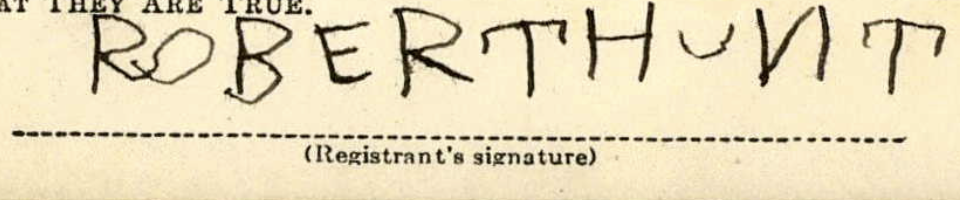
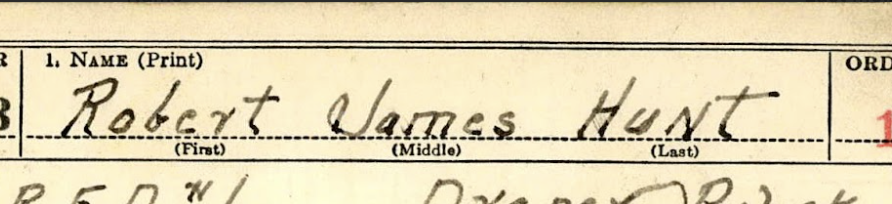
These images depict Robert Hunt’s signature from his World War II draft registration card. We elected to include these images because his signature serves as a lasting artifact that preserves his distinct writing. Additionally, this artifact captures a lot of key information about Robert at the time, including his Draper address and his employment at the Pulaski Workers Progress Administration office. His handwriting may be reflective of the fact that, according to the 1940 Census records, Robert only attended school through the first grade. Black people faced limited educational opportunities in the rural U.S. South, compounded by the suppression of literacy education perpetrated by the state and federal government3. In addition, prominent Black leaders of the late nineteenth and early twentieth centuries debated the best approaches to advancing Black education, for example, Booker T. Washington’s advocacy for industrial education over classical education. Despite this, he advocated for his daughters to receive quality education by participating in the 1947 Corbin et al. v. County School Board of Pulaski County, VA. et al. lawsuit, which successfully called attention to the inequalities of education for Black students in the area. Locally, there were also efforts to bolster adult education; for example, in a 1946 issue of the Calfee Junior Pioneer, there is an advertisement for “Adult School”4 for “children” ages thirty through seventy-five, offering courses in sewing, typing, English, and math. Overall, Robert Hunt’s support for his daughter’s educational pursuits highlights the enduring value of education and literacy in all forms, despite the persistent obstacles faced by Black Americans in accessing education and literacy.
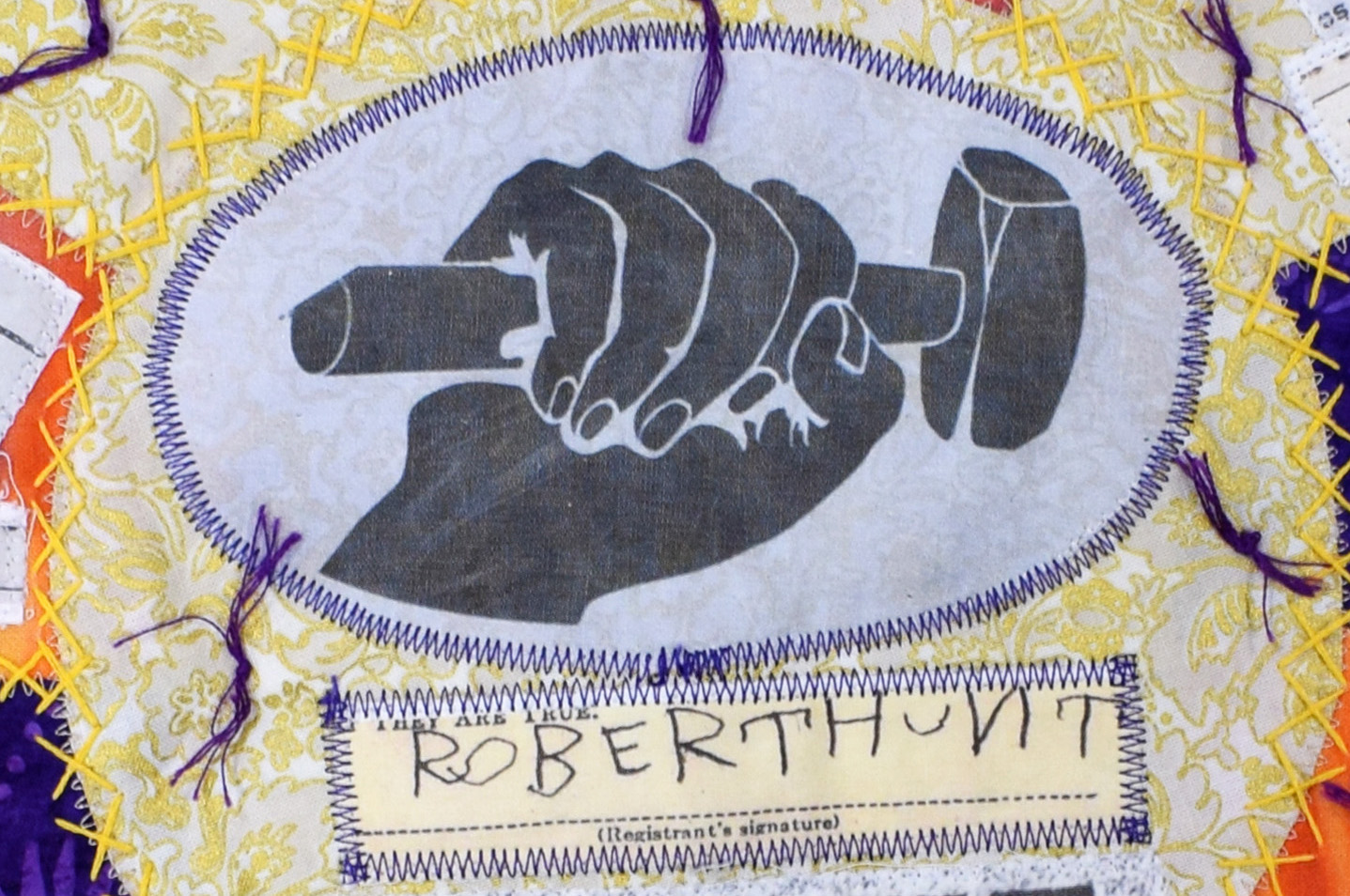
Fist with a hammer
This symbol represents Robert Hunt’s hard work, which paved the way for the success of his children and descendants.
Sallie Hunt and Rosetta Hunt
Symbolic Representations
Sallie Hunt and Rosetta Hunt Typed Names
These names represent Sallie and Rosetta Hunt’s educational achievements, highlighting their strides due to their father’s sacrifices and support. In the 1940s, an estimated 12–17 percent of adult Black men in the South were illiterate5. Many of the Jim Crow-era schools during the early 1900s prioritized occupational trade skills over traditional literary education. In addition, the Federal Census Bureau reported in 19306 that among literate Black men, very few stayed in school past primary education, and almost all had attended segregated Jim Crow schools that did not receive the same funding or resources as their white counterparts7. Furthering systemic challenges endured by the community, in which continued educational attainment was overshadowed by the adverse economic circumstances of the Great Depression in the 1930s.


Sallie Hunt
Summary
Sallie Hunt was born in 1937 to parents Robert and Lillian Hunt. In 1951, The Southwest Times reported that Sallie served as the Calfee Training School Class President.8 After her time at Calfee, Sallie attended Christiansburg Institute and then Virginia State College. Sallie worked as a nurse and she passed away in July of 1986, leaving behind her daughter Carolyn Wilson.
9
Symbolic Representations
Medical Staff with Wings
Sallie Hunt was employed as a nurse. In the 1950s, Black nurses had few options when it came to becoming licensed health professionals, and many nursing students found themselves struggling under the systematic oppression that occurred during the 1950s in the healthcare and medical field10. To this day, there is still a discrepancy in registered nurses in the United States. While around 12 percent of the U.S. population is Black American, only 5 percent of Black Americans account for the registered nurse population11.
Virginia State University Trojan Horse
Sallie Hunt attended Virginia State University, which is a testament to her academic accomplishments. Virginia State University was founded in 1882 (1). It is one of two of Virginia’s land-grant universities12. It is a historically Black university13. In 1920, the school was moved from Hampton Institute, where it had been since the 1870s, to Virginia Normal and Industrial Institute. In 1923, the school’s college program was restored, and its name was changed to Virginia State College for Negroes14.
Marriage Certificate Snippets
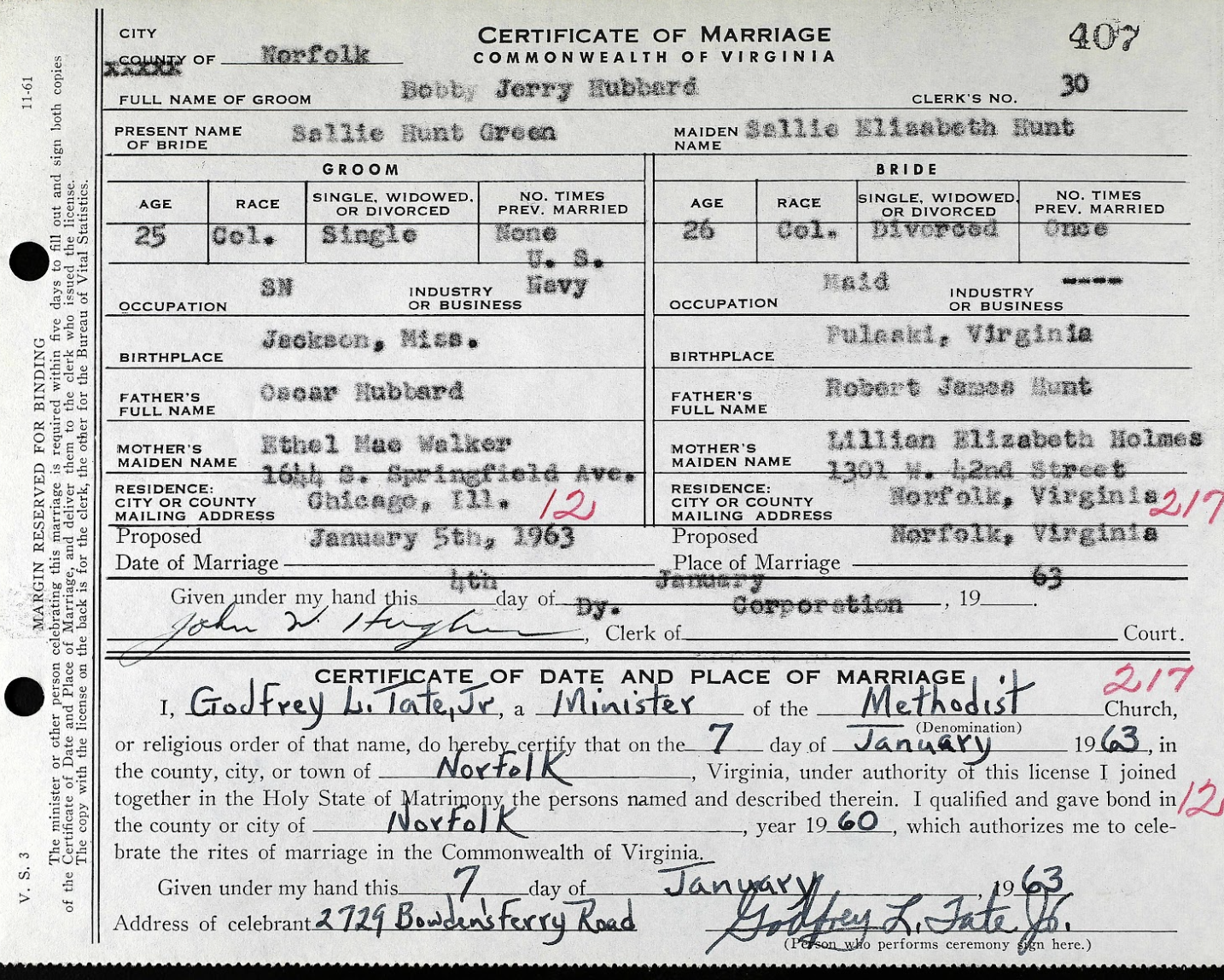
Several snippets were lifted from Sallie’s 1963 Marriage Certificate and transposed on the quilt.
Rosetta Hunt
Summary
Rosetta Hunt was born on March 18, 1934 to parents Lillian and Robert Hunt. Rosetta attended the Calfee Training School and was a reporter for the student newspaper, the Calfee Junior Pioneer. Rosetta was a member of the First Baptist Church on Magazine Street and worked at the Radford Army Ammunition Plant. In August of 1993, Rosetta passed away leaving behind her husband Zack Campbell and four children, Jerry and Deon Campbell, Brenda Saunders, and Rosemary Robinson. 15
Symbolic Representations
Coca-Cola Bottle
This symbolizes one of Rosetta’s favorite pastimes—watching TV while drinking Coca-Cola. Founded in 1892, Coca-Cola was originally intended only for white people. It was primarily targeted toward the white middle class in the 1930s, as the company actively avoided targeting the African American market16. Coca-Cola, whose initial recipe contained cocaine in its soft drinks, was actively against Black consumers drinking it, as medical journals spread fears of the ‘Negro Cocaine Menace.’ White consumers, on the other hand, were encouraged to drink the soda for its ‘uplifting’ qualities17.
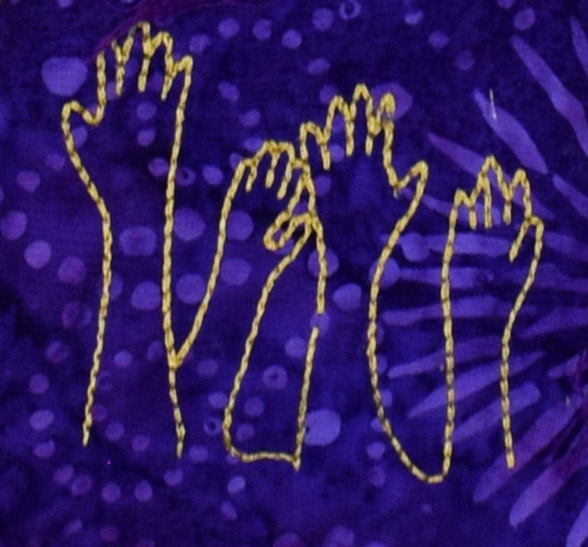
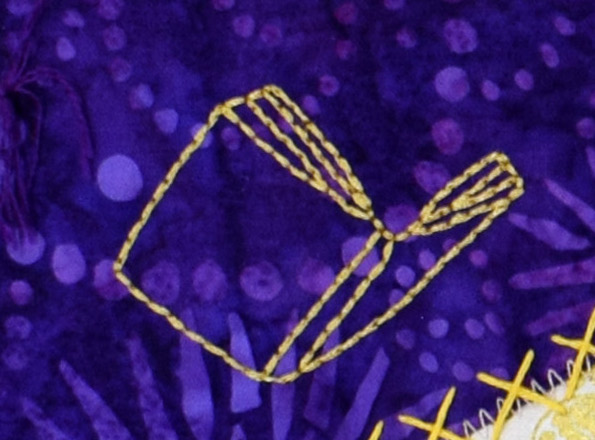
Book and Hands
These symbols represents Rosetta Hunt’s care and leadership qualities throughout her life and work.
- Robert James Hunt. Death Certificate. File number 15883. Commonwealth of Virginia Department of Health Bureau of Vital Records and Health Statistics. Pulaski, Virginia. May 16, 1963. Accessed on Ancestry.com. ↩︎
- “Deaths: Robert James Hunt.” The Southwest Times. May 16, 1963. Page 5. Accessed on Virginia Chronicle Library of Virginia Digital Newspaper Archive. ↩︎
- Shaw, Mary-Liz, “Laws Against Black Literacy in Pre-Civil War South Still Haunt Education, Expert Says.” EdSurge February 20, 2025. https://www.edsurge.com/news/2025-02-20-laws-against-black-literacy-in-pre-civil-war-south-still-haunt-education-expert-says (accessed May 19, 2025). ↩︎
- “Adult School,” Calfee Junior Pioneer, December 1946, p. 1. ↩︎
- Margo, Robert. 1990. “Chapter Title: Race and Schooling in the South: A Review of the Evidence” Publisher: 0–226. ↩︎
- Department of Commerce–Bureau of the Census. Sixteenth Census of the United States. Pulaski, Virginia. Enumerated May 30, 1940. Sheet no. 5. Entry for Robert Hunt. ↩︎
- Irons, Peter. 2023. “Jim Crow’s Schools.” American Federation of Teachers. July 20, 2023. https://www.aft.org/ae/summer2004/irons. ↩︎
- “Calfee Sets Program Day.” The Southwest Times. June 3, 1951. Page 5. Accessed on Virginia Chronicle Library of Virginia Digital Newspaper Archive. ↩︎
- “Obituary: Sallie H. Cooper.” The Southwest Times. July 16, 1986. Page A2. Accessed on Virginia Chronicle Library of Virginia Digital Newspaper Archive. ↩︎
- Tucker, Victoria. 2021. “Race and Place in Virginia – the Case of Nursing.” UVA School of Nursing. The Rector and Visitors of the University of Virginia. February 5, 2021. https://nursing.virginia.edu/news/bhm-claytor/. ↩︎
- “Making History.” 2013. Minority Nurse. March 30, 2013. https://minoritynurse.com/making-history/. ↩︎
- “A Greater Institution since 1882.” 2024. Virginia State University. November 26, 2024. https://www.vsu.edu/about/history/greater-institution.php. ↩︎
- “About VSU.” n.d. Virginia State University. https://www.vsu.edu/about/. ↩︎
- “Our History.” n.d. Virginia State University. https://www.vsu.edu/about/history/. ↩︎
- “Area Deaths: Rosetta H. Campbell.” The Southwest Times. August 4, 1993. Page 2. Accessed on Virginia Chronicle Library of Virginia Digital Newspaper Archive. ↩︎
- “The Ugly Racial History of America’s Soft Drink Brands.” 2019. New Pittsburgh Courier. July 31, 2019. https://newpittsburghcourier.com/2019/07/31/the-ugly-racial-history-of-americas-soft-drink-brands/. ↩︎
- Gershon, Livia. 2024. “Who Took the Cocaine out of Coca-Cola?” JSTOR Daily. June 3, 2024. https://daily.jstor.org/who-took-the-cocaine-out-of-coca-cola/. ↩︎
 23/54 PROJECT