
Peoples
The Peoples family made their home in Pulaski County, where J.T. Peoples built a life rooted in farming and provided for his household through the land he tended. In 1947, J.T. signed Henry H. Peoples, Willis F. Peoples, and Mary E. Peoples onto the Corbin et al. v. County School Board of Pulaski County (1947) lawsuit, joining other Black families in the fight for equal education. Although little is known about J.T.’s life beyond census records, the sense of responsibility and care reflected in his actions can be seen carried forward by relatives like Ruth Peoples, who raised her children as a single mother, worked as a housekeeper, and organized NAACP rides to the polls. The Peoples family story reflects enduring ties to land, community care, and a shared commitment to supporting one another across the years.
Explore the quilt by clicking on the various elements
For best user experience, use full screen mode.
An interactive graphic of the quilt square. The linked information can also be found below.
As Frances Peoples McKinney describes it, the Peoples family represents a rich tapestry of intersecting stories, experiences, and influences that collectively shape their generational identities, which is why the Peoples family chose a quilt design inspired by a crazy quilt. Each patch tells its own story, reflecting the individuality of its pieces, yet each contributes to something greater than the sum of its parts. In the same way, the Peoples family history is a mosaic of unique experiences and relationships that, when viewed together, form a vibrant and cohesive identity—symbolizing the beauty of interconnected lives and the enduring strength of embracing diversity within a shared legacy.
Learn More About the Peoples Family
Peoples Family Participants in the Lawsuit
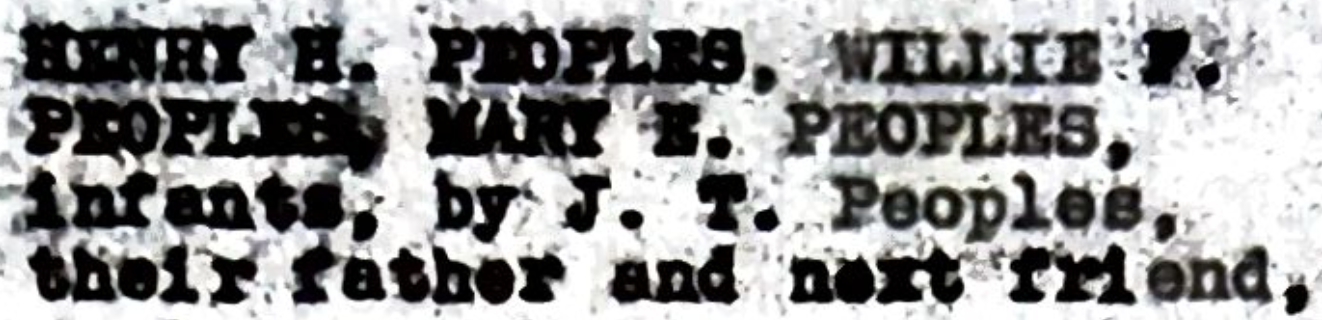
This quilt block features an image honoring the Peoples family members who participated in the lawsuit. In 1947, Father J.T. Peoples signed on three of his great-grandchildren, Henry H. Peoples, Willis F. Peoples, and Mary E. Peoples onto the Corbin et al. v. County School Board of Pulaski County, VA. et al. case. While Frances recalls limited information about these individuals, their inclusion is vital to commemorating their bravery and the lasting impact of their actions. By highlighting their contributions, this piece serves as a tribute to their courage and a recognition of the legacy they helped shape for future generations.
The case file section that was included on the Peoples quilt square design reads “Henry H. Peoples, Willie F. Peoples, Mary E. Peoples infants by J.T. Peoples, their father and next friend,”
Recurrent Themes
Resilience
The quilt captures the family’s resilience through symbols representing their ability to overcome challenges and hardships. Ruth Peoples’ dedication to raising her children as a single mother, her work with the NAACP, and Frances’s achievement as the first family member to attend college highlight the perseverance embedded in their family identity. This resilience is further symbolized by the farming imagery on the quilt, representing hard work and connection to the land as a foundation for survival and growth.
Civil Service
Ruth Peoples’ work for the NAACP, where she encouraged local residents to vote and supported civil rights causes, exemplifies the family’s dedication to community and justice. The inclusion of the telephone, symbolizing Ruth’s activism, reflects her commitment to creating positive change. Additionally, the family’s participation in the lawsuit honors their bravery and willingness to stand up for their rights, reinforcing their civil service legacy.
Generational Traditions
Generational traditions in the Peoples family are symbolized through food, music, and storytelling. Ruth’s baking and canning, Frances’ fond memories of sneaking pieces of her mother’s canned sausage, and the family’s recipes for cakes and breads represent traditions that connect past and present. Music also plays a key role. Ruth’s singing and Frances’ memories of singing gospel songs with her brother, Billy Douglass, illustrate the family’s love for creativity and connection through shared experiences.
Artifacts by Family Member
Frances Peoples McKinney
Summary
Frances Peoples McKinney recalls no memories of other family members sharing the last name “Peoples” beyond her immediate household and her uncle. She lived with her mother, Ruth, and her brothers, forming a close-knit family unit. Despite this, the research committee felt it was important to honor and represent other individuals with the “Peoples” surname mentioned in the lawsuit, such as JT Peoples. This decision reflects our commitment to acknowledging the broader connections and complexities within the family’s history, even when direct ties might not be part of Frances’ personal memories.
Symbolic Representation
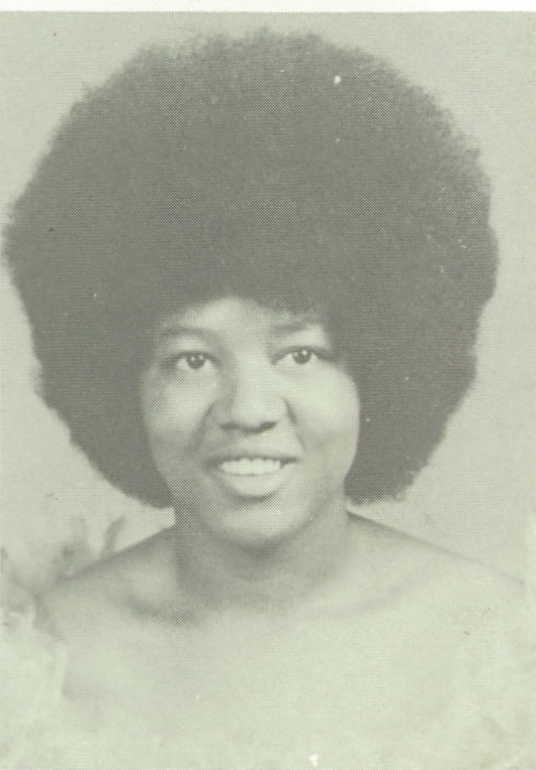
Frances McKinney High School Yearbook Photo- 1973
Taken from her 1973 yearbook, Frances McKinney’s photo is prominently displayed on the top right of the quilt block. With all the help, sacrifices, and contributions Frances McKinney has made for her children, her community, and the 23/54 project, displaying her photo in such a manner felt necessary and correct. Her character consistently demonstrates resilience, compassion, and selflessness as she perseveres in her educational journey despite numerous obstacles and sacrifices made for her four children.
Photo: Frances Peoples McKinney 1973 Pulaski High School Yearbook, Provided by Frances McKinney
New River Community College
Frances attended the Calfee Training School from the 2nd to 4th grades, where she encountered difficulties with material and, to her, teachers who lacked compassion. As Frances’ journey through education was not linear, she reflects more positively on her educational experiences later on in adolescence with teachers “who went the extra mile”. In her adult life, Frances became the first in her family to attend college, earning a degree in Human Services. She now has four children and continues to carry the experiences of her early education, both the painful and positive, into her life and her testimony. Her achievement set a transformative example for her children, who also pursued higher education. This image symbolizes a new generation of learners inspired by Frances’s trailblazing path.
Okemia’s Quilting Fabric
The Quilt Fabric at the bottom center of this block is from Okemia “Kim” Peoples Holiday, an avid quilter and the daughter of Rev. Frances McKinney. The inclusion of fabric from Okemia’s personal collection of quilting materials was purposefully meant to to pay tribute to the quilters within the Peoples family, and how Black women as quilters in Appalachia have changed and influenced the art of quilting. Those who took on the art of quilting within the 23 families attached to the Corbin et al. v. County School Board of Pulaski County, VA. et al. case and within Pulaski’s Black community have inspired the 23/54 project. It was community members like Okemia Peoples Holiday who carried traditions and created art in the form of quilting who led the 23/54 project in the direction of creating a quilt as a monument.
J.T. Peoples
Summary
According to Frances, the little she knows about her extended family revolves around their connection to the farming industry. We incorporated images of flowers, potatoes, green beans, and a garden rake into the quilt to symbolize this aspect of their shared heritage. These elements serve as a visual thread, connecting the family’s legacy to the land and their agricultural roots and celebrating the resilience and hard work that defined their lives. This imagery weaves a tangible link between their history and the quilt, making it both a tribute and a storytelling piece.
Symbolic Representation
Potato
J.T. Peoples started the family farm in Pulaski, Virginia, where his legacy of the family farm continued through multiple generations. Some of the many things grown on the Peoples family farm were Green Beans and Potatoes, which are displayed in the top left of the quilt block, along with a Steel Rake similar to one the family would have used on the farm. The fabric used in this section of the quilt square details light golden and pink flowers to represent the farmland, its beauty, and all it gave to the family.
JT Peoples WWI Registration Card
To represent JT Peoples, a cutout of his Draft Registration card showed his address at the time and his date of birth. As an adult, JT chose farming as his profession, establishing himself in the local community. His work ethic and dedication were defining features that carried him through the highs and lows of farm life. While the Corbin v. Pulaski County School Board lawsuit lists JT Peoples signing on Henry H. Peoples, Willis F. Peoples, and Mary E. Peoples as his children, the 1950 census identifies both Willie and Mary as his great-grandchildren, suggesting that he played a guiding role in the lives of younger family members. Over the years, Joseph’s legacy has been preserved through historical documents that reflect his contributions and character: census records, military draft registration cards, and marriage certificates, each adding a layer to the story of his life.
Ruth Peoples
Summary
Ruth Peoples worked as a housekeeper while raising her children as a single mother. According to Frances, Ruth loved singing, baking, and canning food items. One of Frances’ core memories is sneaking into the kitchen to take a piece of sausage that Ruth had canned. Ruth also demonstrated a keen interest in local politics, working the telephone for the NAACP and encouraging local residents to participate in the voting process. Frances remembers hearing Thurgood Marshall’s name mentioned frequently in their household, although she was too young to recall the details of the conversations.
We included an image of Ruth alongside symbols of her professional and personal passions to represent her identity.
Symbolic Representation
NAACP Voting Ballot Box & Telephone
The family’s commitment to fighting for civil rights did not just end with the 1947 Corbin v. Pulaski County School Board lawsuit, but continued through multiple generations of the Peoples family. Ruth Peoples emphasized exercising the right to vote by managing a telephone where people would call in and ask for a ride to the polls to vote. Every election for multiple years, Ruth Peoples answered the phone for many community members in need of a ride to the voting polls, no matter friend, family, or stranger. The significance of the NAACP being written across the ballot box stems from Ruth’s commitment to working with the NAACP and the Black community, seeing the NAACP as their voice. Multiple times, Ruth Peoples went to the NAACP in the hopes of getting legal representation for her children after two incidents involving her sons. Ruth Peoples was a person committed to fighting racial injustice on multiple fronts, from her services driving people to vote, her legal battles involving her children, in which she attempted to work with the NAACP, and her attempts to attend Civil Rights marches, including the 1963 “March on Washington for Jobs and Freedom” in Washington D.C.
Music Note
The music tradition, specifically singing, was passed through multiple generations of the Peoples family. Frances McKinney remembers stories of her uncle, Billy Douglass Peoples, gathering some friends, and they would sing gospel music on the back porch of her childhood home. McKinney also fondly remembers her mother singing throughout the house while doing various activities. Particularly in Appalachia, singing and music in general have deep cultural roots in African American communities within the mountains, creating a space where many Black Appalachians passed down their stories to future generations.1 Many families in the 1947 lawsuit had deep connections to music, particularly gospel music, which often symbolized unity for Black communities during the Civil Rights Movement.2 Both Ruth and Billy Douglass Peoples used music to foster community and unity, and the passing of stories down to the next generation of the Peoples family created positive memories for Frances McKinney as she recalled the presence of music in her family.
Image of Ruth Peoples
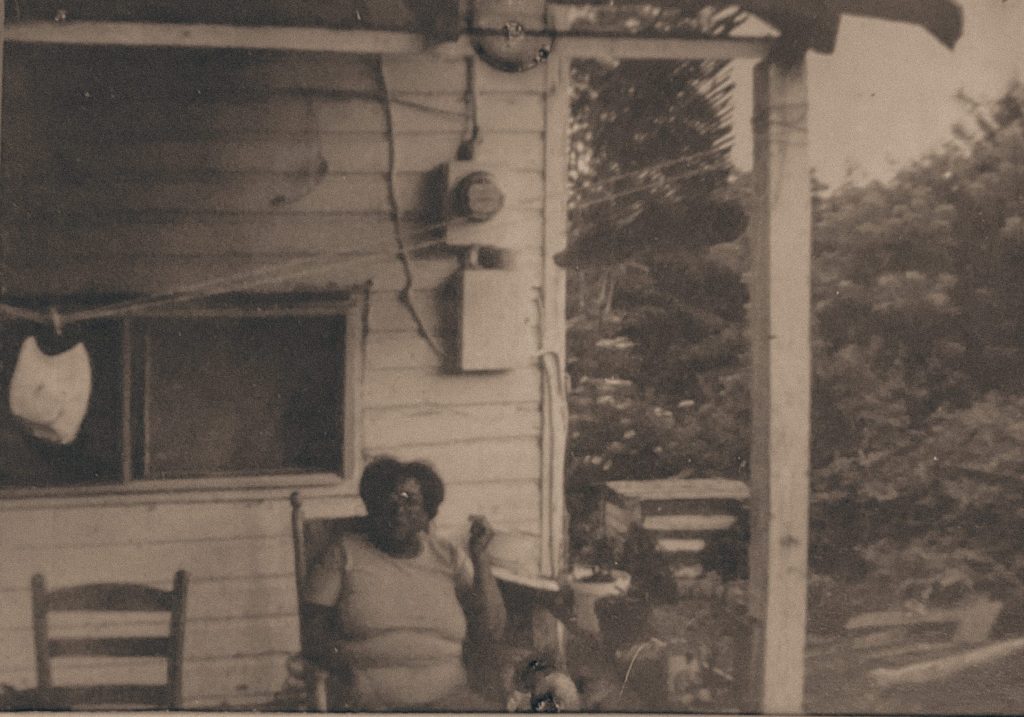
Ruth Lee Peoples, mother of Frances McKinney, raised seven children as a single mother. She worked as a housekeeper and diligently provided for her children despite the challenges of single parenthood. Remembered for the sacrifices she made for her family, her photo, displayed in the middle of the Peoples family quilt square, signifies how she was the glue that held the family together.
Photo: Ruth Lee Peoples Sitting on Porch, Provided by Frances Peoples McKinney
Thurgood Marshall
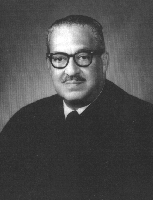
Along with the many discussions surrounding voting and civil rights in general that Ruth Peoples emphasized in their home, Thurgood Marshall, the American Civil Rights lawyer and Supreme Court Justice, became a household name mentioned on multiple occasions.3 Thurgood Marshall was among the prominent African American legal representatives, including Oliver Hill and Spottswood Robinson, who took on the fight for the Calfee Training School and Black residents of Pulaski in their legal effort to equalize educational facilities and wages.
While attending a Black teachers’ education convention in Hampton, Virginia, Chauncy D. Harmon, a teacher and then later principal of the Calfee Training School, met and spoke with Thurgood Marshall and convinced him to take on Calfee’s legal fight for equal access to education. Coming to Pulaski in the late 1930s, Thurgood Marshall came to recruit teachers at Calfee for the initial lawsuit, which was put on hold due to the burning of the school. Thurgood Marshall’s involvement in the case that multiple generations of the Peoples family signed onto, along with all the effort he made towards the civil rights movement throughout his life, cemented his name as a common one spoken by Ruth Peoples and other family members.
Photo: Thurgood Marshall Portrait 4
Hoe Cake Symbolizing family traditions in food.
A specific recipe Frances McKinney remembers being prominent in their family was a type of cake they called “Hoe Cake”. Her mother Ruth Peoples had a lot of different cakes and breads she would bake, such as Lemon Cake and Black Forest Cake, but the one that stuck out in Frances McKinney’s memories the most was the Hoe Cake bread her mother would make, which consisted of milk, flour, water, and butter. Some southerners refer to this desert as “biscuit bread” as the finished product resembles that of a hung biscuit in a cake form.5 Learning by watching, Frances McKinney picked up on making the delicious dessert and continues to make it to this day. Hoecake, bread, and baking bring back many positive memories from her childhood and her mother.
Ruth Peoples’ Cake Recipe
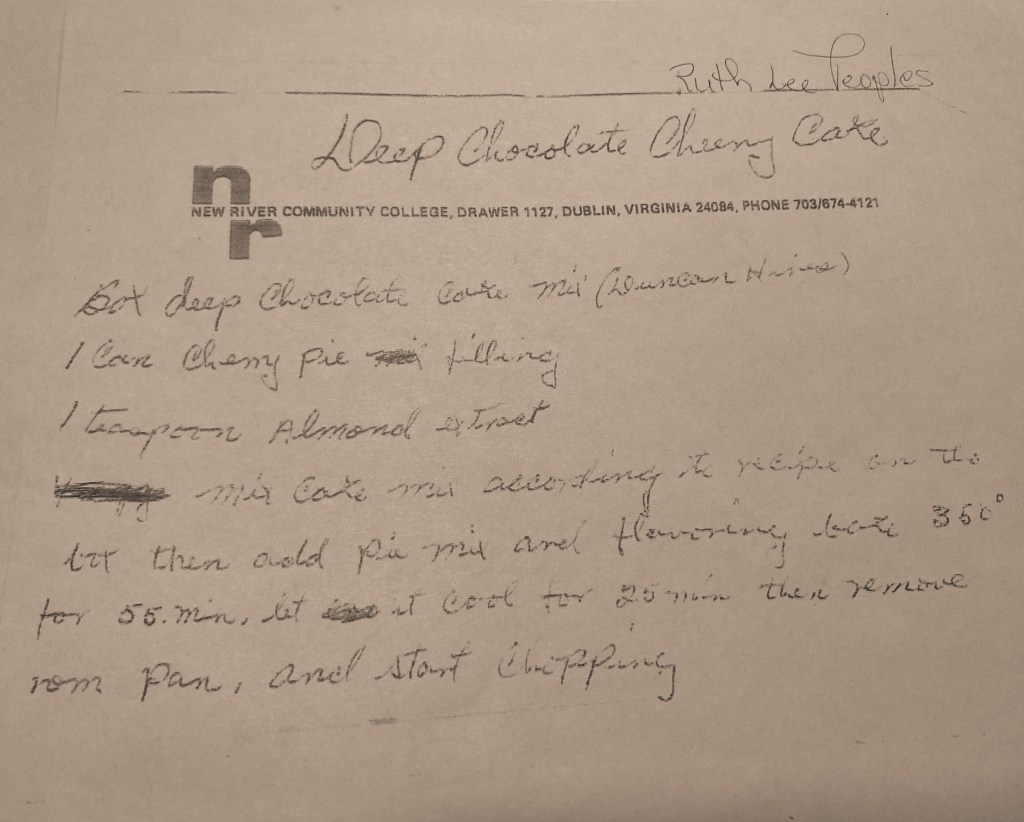
To represent the family’s baking traditions, a copy of Ruth’s “deep chocolate cherry cake” recipe was included on the People’s quilt square. Hand-written by Ruth Peoples herself, this was one of the many family recipes that remain important to the family. The recipe on the quilt is another example of Frances McKinney’s positive association with her mother and baking.
Photo: Ruth Lee Peoples Deep Chocolate Cherry Cake Recipe Card, Provided by Frances Peoples McKinney
Julius Peoples
Summary
Julius Peoples was an uncle of Frances McKinney, whom she knew by the nickname “Buttercup.” He was known to have served during World War I under an unknown US military branch. During World War I, over 350,000 African Americans were involved in the global conflict, serving in segregated units mostly in supporting roles.6 Despite their contribution to the war effort, African American veterans continued to face discrimination after, and even because of, their service. While not widely recognized by narratives surrounding America’s involvement in WWI, African American soldiers such as Julius Peoples played a significant role in the United States’ efforts to win the international conflict.
Poppy
Julius Peoples served during World War I, in an unknown branch of service. In an effort to commemorate his time during the First World War, a poppy was placed on the right side of the quilt square. Poppies became synonymous with Armistice Day, the day the Armistice that officially ended World War I was signed, to remember all those who fought and died during the war.7 Poppies were also a common sight along the Western front lines during the war, popping up amongst the land torn by heavy machinery, trenches, and fighting. Commonly used to remember the First World War and all of those who served during it, the inclusion of the poppy into the quilt block was made to honor Julius Peoples and the sacrifices he made by fighting in the war.
Generational Connections
Alcohol Bottle
Although a somber subject, Frances felt it was important to recognize the impact of alcohol use disorder within the family’s history. She insisted on including it as a small but significant element on the quilt, ensuring it did not overshadow the broader narrative while acknowledging its place in their shared story. Frances McKinney remembered the presence of struggles with mental health and alcohol abuse as constant battles many of the family members had to face. Bourbon was the typical drink that was remembered the most to be in and around the family home and was therefore included as a line drawing to represent the challenges faced and overcome by Frances McKinney and her other family members. The presence of the Bourbon bottle served as a sign of the lack of resources available to help African Americans who might have been struggling with their mental health or alcohol abuse. Just as her educational journey proved, Frances McKinney was resilient because she could overlook the negative experiences associated with her family and alcohol, and had a positive outlook on life that created a healthy environment for her four children.
Sources
- “African American Southern Appalachian Music.” National Park Service. Accessed June 27, 2025. https://www.nps.gov/grsm/learn/historyculture/african-american-southern-appalachian-music.htm.
↩︎ - Freeman, Mia. “Fuge: The Importance of Gospel Music to the Black Community.” Furman University Admission Blog, February 18, 2022. https://www.furman.edu/admissions-aid/admission-blog/fuge-the-importance-of-gospel-music-to-the-black community/#:~:text=Historically%2C%20gospel%20music%20helped%20enslaved,turned%20into%20chants%20for%20marches.
↩︎ - “Justice Thurgood Marshall Profile – Brown v. Board of Education Re-Enactment.” United States Courts. Accessed June 27, 2025. https://www.uscourts.gov/about-federal-courts/educational-resources/educational-activities/brown-v-board-education-re-enactment/justice-thurgood-marshall-profile-brown-v-board-education-re-enactment.
↩︎ - “Thurgood Marshall Supreme Court Justice.” Bowie State University Library. Accessed June 27, 2025. https://bowiestate.edu/library/about-the-library/thurgood-marshall.php.
↩︎ - Butler, Tina. “Southern Hoe Cake Aka Biscuit Bread.” Mommy’s Kitchen and Homestead, August 2, 2008. https://www.mommyskitchen.net/2008/08/southern-hoe-cake.html. ↩︎
- “How World War One Changed America: African American Experiences.” The National WWI Museum and Memorial, June 27, 2022. https://wwichangedus.org/topics/african-americans-in-wwi/#:~:text=More%20than%20350%2C000%20African%20Americans,democracy%20remained%20unrealized%20at%20home.
↩︎ - “Why We Wear Poppies on Remembrance Day.” Imperial War Museums. Accessed June 27, 2025. https://www.iwm.org.uk/history/why-we-wear-poppies-on-remembrance-day.
↩︎
 23/54 PROJECT