
Smith Family
The Smith family is one of the few with two generations represented in the Corbin et al. v. County School Board of Pulaski County (1947) lawsuit and on the 23/54 quilt. In 1947, Oscar Smith and Edith Smith were signed onto the case by William A. Smith, while Robert Smith Jr. and Letha Mae Smith were signed on by Robert L. Smith — all joining the broader effort to secure equal education for Black children in Pulaski County. The Smiths were widely respected in their community, known for their strong character and the reputation they upheld across generations, and were often regarded as “Black royalty,” admired for their talent, success, and commitment to excellence. Later relatives, like Calfee alum Terry Smith, remember school life as deeply “family-like,” filled with May Day celebrations, homemade lunches, and teachers who pushed students to succeed. Across the years, Smith family members have been active in church service, basketball, military service, and local industry, reflecting a legacy of perseverance, pride, and community leadership.
Explore the quilt by clicking on the various elements
For best user experience, use full screen mode
An interactive graphic of the quilt square. The linked information can also be found below.
The overall design of the quilt features a five-pointed star symbolized by the five arrows. The lantern at the center represents the guiding light of the family’s successes, illuminating the path for their descendants. We aimed to position the descendants’ achievements at the points of the arrows, while the accomplishments of the case family members are showcased in the spaces between the points.
Learn More About the Smith Family
Artifacts by Family Member
Robert Smith Jr.
Robert Smith Jr., known affectionately as “Bug,” was born on January 2, 1939 in Allisonia, Virginia, to Robert Sr. and Agnes Miller Smith. After attending Christiansburg Institute, he married his high school sweetheart, Irma Jean Young, before serving in the United States Army with the 82nd Airborne in Europe. Following his return, Robert and Irma raised three children: Irma Joy, Robert III (Tink), and Guy Lee. A tremendously dedicated community member, Robert worked at Hercules Incorporated until retirement and was an active member of First Baptist Church on Magazine Street, serving on various committees, including as a Trustee and deacon. He enjoyed fishing, gardening, and cherished time spent with friends and family. Robert’s unwavering faith and devotion to Irma were the cornerstones of his life. His legacy of love, service, and faith will continue to inspire those who knew him.
Symbolic Representation
Photo of Christiansburg Institute
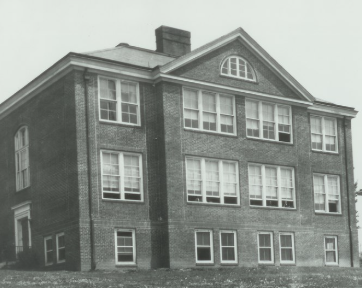
This image represents Robert Smith Jr.’s attendance at the Christiansburg Institute. The Freedmen’s Bureau founded Christiansburg Institute in 1886–1887 to educate recently emancipated slaves. In 1896, Booker T. Washington became an advisor to the school. Before closing in 1966, Christiansburg Institute had students from 15 counties in its surrounding areas. Many of these students had to endure a long commute to attend the school, limiting their educational and extracurricular opportunities.1 Issues such as commute times, poor school conditions, and many more disparities led to the Corbin et. al v. County School Board of Pulaski County, VA, et. al (1947), which argued that separate but equal was indeed not equal. The case argued that Black schools, such as the Christiansburg Institute and the Calfee Training School, were unjustly underfunded and undermaintained by the Virginia County School Boards.2
Man in Construction Hat
This symbol highlights Robert Smith Jr.’s role as a foreman at Hercules Knox, a rare achievement for a Black man at that time. Despite a history in the construction field due to slavery, in the mid-1900s, many black construction workers faced severe discrimination in their field. Many Black Americans were denied access to loans or bonds, impacting their ability to lead and take on larger construction projects. In addition, Black Americans tended to be excluded from construction unions.3
Fish
The fish symbolizes Robert Smith Jr.’s love for fishing. It was added to highlight this specific family member’s hobbies. Fishing as a tradition has followed Black Americans since slavery, when enslaved people needed to fish to supplement their limited food supplies. Following emancipation, Black Americans in the South continued to fish, as Black people were pushed to the coastal areas after the Civil War. Fishing became a vital resource for Black families, allowing them to feed their households and earn an income.4 At one point, 90 percent of the commercial fishing industry in the Chesapeake Bay was employed and owned by African Americans; however, this number has significantly dwindled.5
Pulaski High School Symbol

Robert Smith III (Tink), one of Robert Lee Smith Jr.’s sons, was inducted into the Pulaski County High School Hall of Fame, symbolizing the family’s dedication to educational endeavors and the Pulaski community.
In 1960, the first Black students attended Pulaski High School. This process started in 1959 when 18 Black students applied to the state-appointed Pupil Placement Board, which determined whether their applications were strong enough to transfer them to white schools. Federal Judge Roby Thompson ruled that 14 Black students could attend Pulaski High School because there was no Black high school in Pulaski County. Thirteen students, including Richard Smith, enrolled and attended Pulaski High School in 1960.6
Robert L. Smith Sr.
Robert Lee Smith Sr. was born to parents William and Edith Smith on April 28, 1916.7 His younger siblings Oscar and Edith were also cited in the lawsuit alongside his own children Leatha and Robert Jr. Throughout his professional career, Robert Sr. embraced a diverse array of roles. He served in World War II under the Quartermaster Truck Company as a Private First Class. He was also employed at the Radford Army Ammunition Plant. Each job contributed to his rich tapestry of experience, reflecting his dedication to his work.
Symbolic Representation
WWII Soldier Medal

This was used to honor Robert L. Smith Sr. service in World War II. Robert Smith was a Private First Class in the war and worked under the Quartermaster Truck Company.
During World War II, around one million Black Americans served in every United States armed forces branch. These soldiers faced discrimination from the U.S. military, as the Navy, Marine Corps, and Army segregated Black Americans into separate units from their white counterparts. Despite this, several prominent Black units emerged. The 332nd Fighter Group shot down 112 enemy planes during their 170 bomber escort missions, while the 761st Tank Battalion received special praise after their first action in France. Black Americans also served in critical roles throughout the Army, including as nurses, engineers, paratroopers, gunners, and truck drivers.8
Radford Army Ammunition Plant Symbol
Robert Smith was employed at the Radford Army Ammunition Plant, which began operations on April 5, 1941. The plant produced a variety of propellants and energetics to support war efforts in Europe and the Pacific Theater.When World War II ended, operations at the central plant were discontinued. However, the Korean War required updates and rehabilitation of large plant areas to accommodate military needs. With the onset of the Vietnam War, there was a renewed demand for the production of propellants. In modern history, the Radford Army Ammunition Plant is one of six government-owned, contractor-operated ammunition plants.9 The Radford Army Ammunition Plant (RAAP) was essentially a nuclear waste site located near primarily minority communities, specifically Black communities. Many of the people in these communities went to work for RAAP, and in turn, the companies polluted these areas, contributing to a phenomenon known as “ Eco-Racism”. RAAP also lacked proper safety regulations, leading to chronic illnesses in individuals who worked at the plant. Due to the historical lack of high-paying work opportunities for Black Americans, many accepted the hazardous working conditions to have access to higher pay.

Richard Smith
Born on September 24th, 1942, Richard Smith was one of 8 children to Robert Smith Sr. and Agnes Miller Smith and grew up on Magazine Street with his family. Richard Smith went to Rich Hill school in Allisonia and was taught by Irene Holt Morrison for the first couple of years of elementary school, and then went to school at Calfee and graduated 7th grade there. After Calfee, Richard went to CII from 8th to 10th grade and Pulaski High School from 11th to 12th grade. Richard was among the first 13 black students to attend Pulaski High School in September of 1960 after his father pushed him to switch to PHS from CII. Richard Smith was reluctant to begin school at PHS because he knew that he was not going to be able to play basketball like he did at CII at PHS due to coaches and tryouts, which typically still racially discriminated against black student athletes even after desegregation. Richard Smith has been an active member of the First Baptist Church on Magazine Street since elementary school and eventually earned the title of Sunday School Superintendent in his adult years. Being heavily involved in the church to this day, the First Baptist Church and the community gathered there have made a long-lasting impression on Richard Smith and his wife, Carolyn Smith. Being the place where they were both baptized, worshiped, and even married, the First Baptist Church on Magazine Street is a place where community and pride are felt by Richard and Carolyn Smith, as well as the rest of the Smith family.
Carolyn Simms Smith was born on July 20th, 1944, and grew up on Locust Hill, Pulaski as an only child. Carolyn, just like Richard Smith, has attended First Baptist Church since she was little. During her childhood years, O.L. Johnson was the reverend of the First Baptist Church, and he would pick Carolyn up on Sunday mornings to take her to Sunday school at the church. She was a member of the church’s children’s choir when she was younger and is a current member of the First Baptist Church’s adult choir. After graduating from 7th grade at Calfee, she attended Christiansburg Industrial Institute, where she was a Majorette in the band and graduated in 1962. Singing and music, in general, have had a significant presence in Carolyn Smith’s life. She has continued her commitment to being involved in the First Baptist Church choir and singing during events such as dances and dinners.
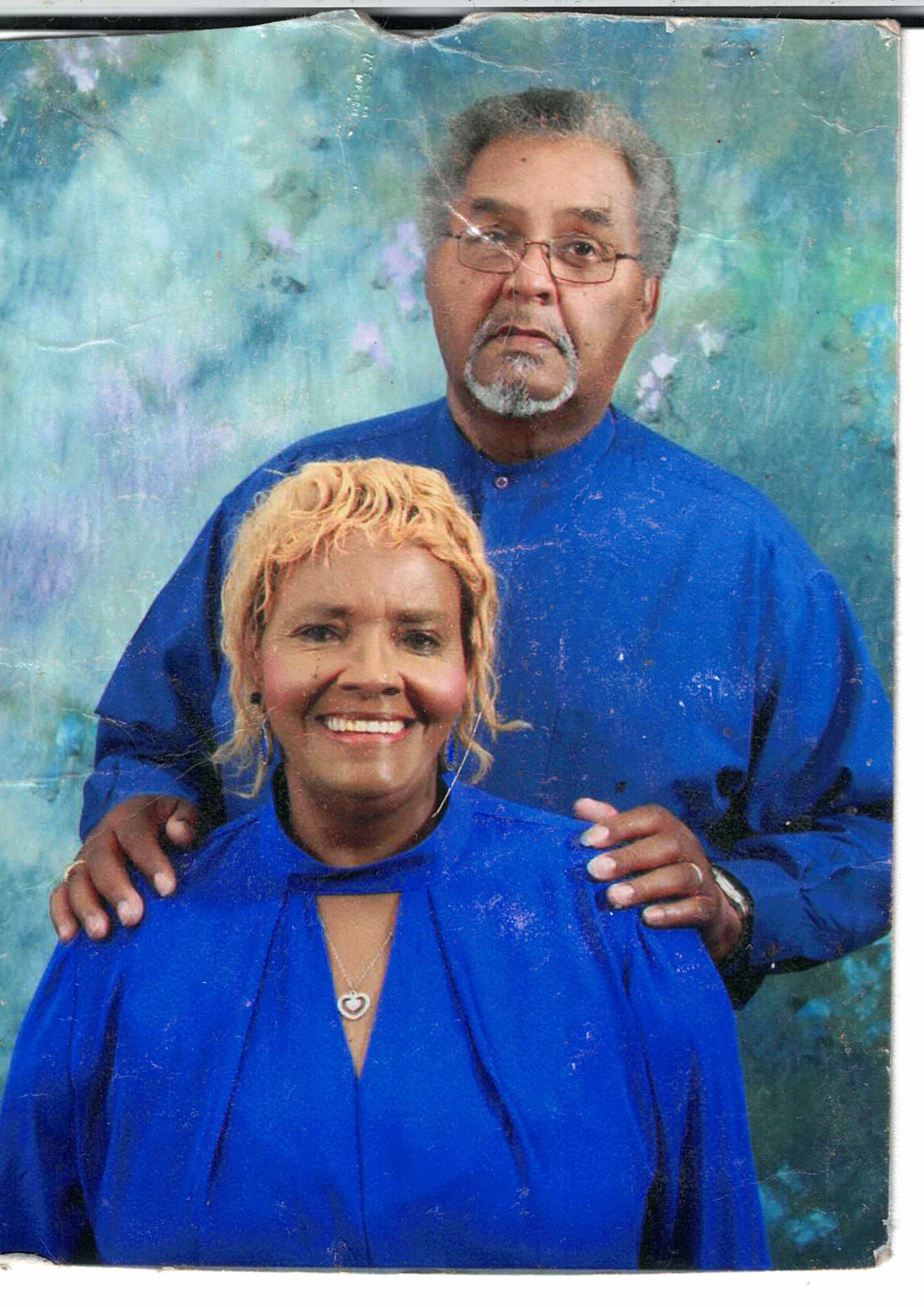
Carolyn and Richard both attended the First Baptist Church as children with Reverend Douglass L. Patterson making a lasting impression on the couple, attended Calfee and CII, worked at the Radford Arsenal Plant for over 40 years together, and were heavily involved in their community and families. The two of them married in 1974 in the newer building of the First Baptist Church in what was remembered as a wonderful evening made possible by friends, family, and the community involved in the Church. Together they had five children, Shila, David, Regina, Darnell, and Darell. The couple continues to be heavily involved in their community and in their faith, in which they “couldn’t do it without each other”.
Symbolic Representation
Torch
This symbol represents the athletic successes of the Smith family’s descendants, including Richard Smith, who played on an all-Black baseball team managed by Carolyn Smiths uncle, and Terry Smith, a standout basketball player nicknamed ‘Helicopter’ for his incredible jumping ability. Sports have played a significant role in African American history, serving as one of the first high-profile spaces where Black Americans could be recognized based on merit rather than race.
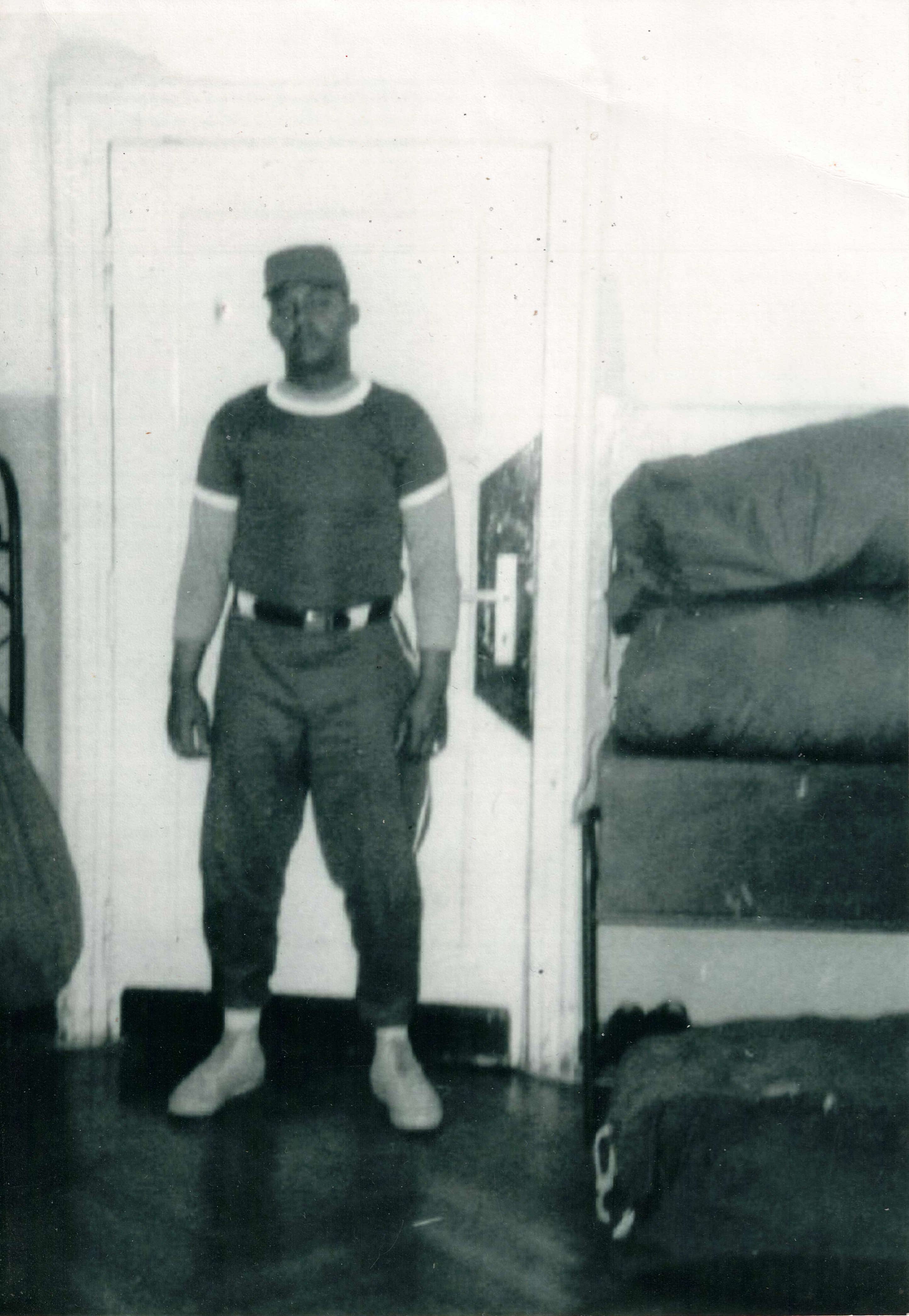
James and Sharon Smith
James Smith is the brother of Robert Jr., Terry, and Richard Smith. James attended Calfee, noting that his favorite Calfee teacher was Ms. Nettie G. Anderson. James and Rosa Sharon have three children: James Walter “J.W.” Smith Jr., Sherry Johnson of Dublin, Virginia, and Jeremy Smith (Bobbie) of Roanoke, Virginia. The Smiths still live in Pulaski, VA, to this day. In 2021, the First Methodist Church of Pulaski sponsored a classroom in the Harmon Learning Center at the Calfee Center in honor of James Smith as a way of recognizing and appreciating his 40+ years of service to the church.
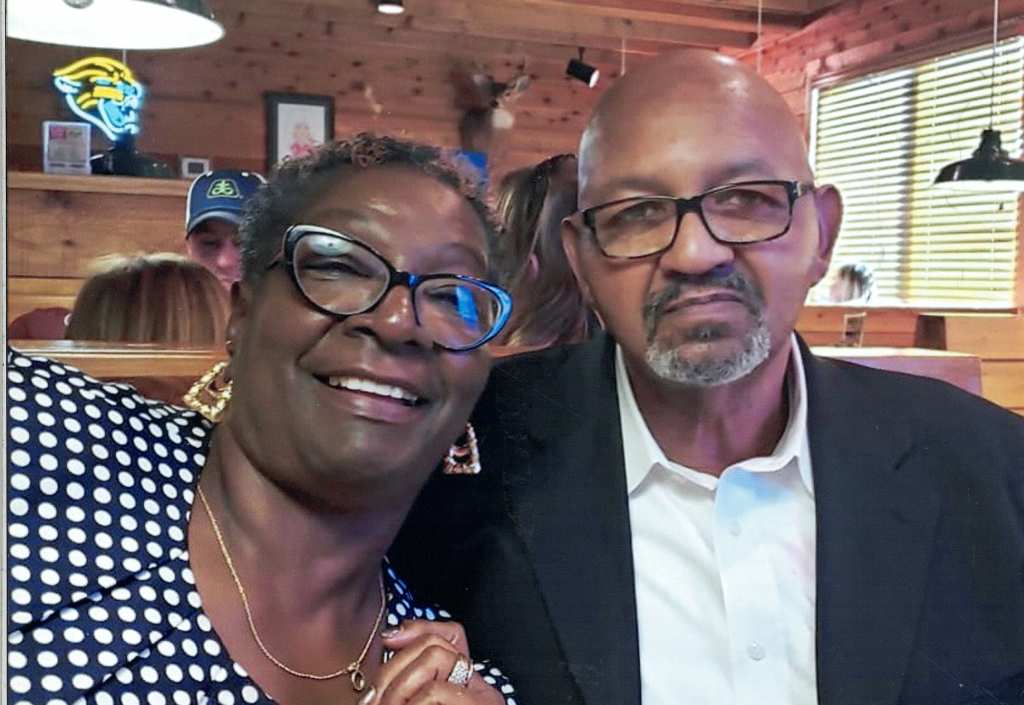
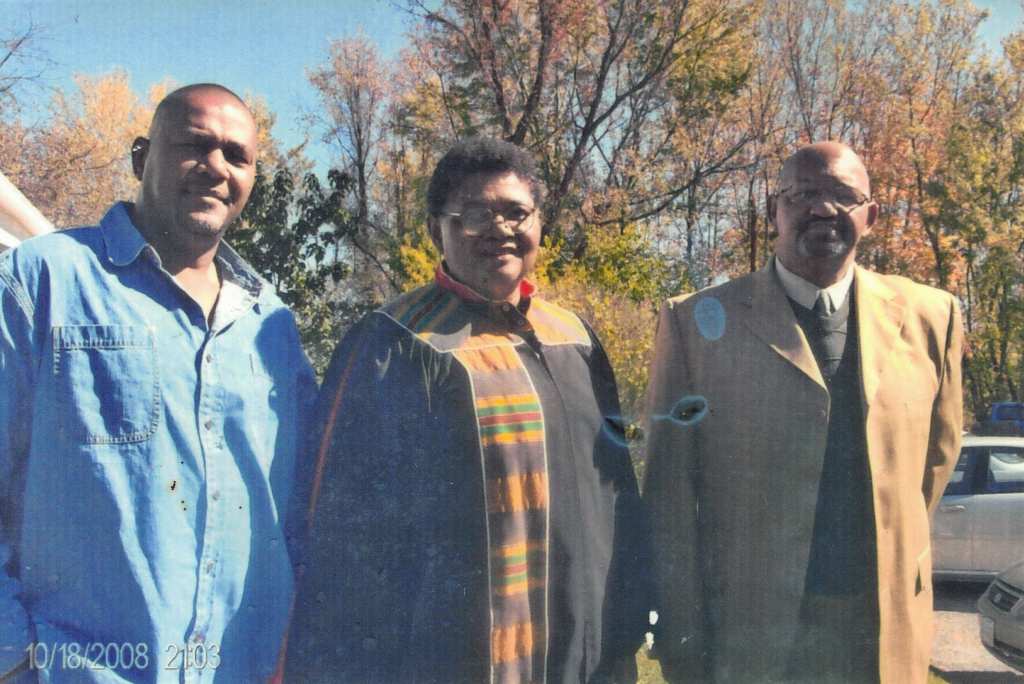
Leatha Mae Smith
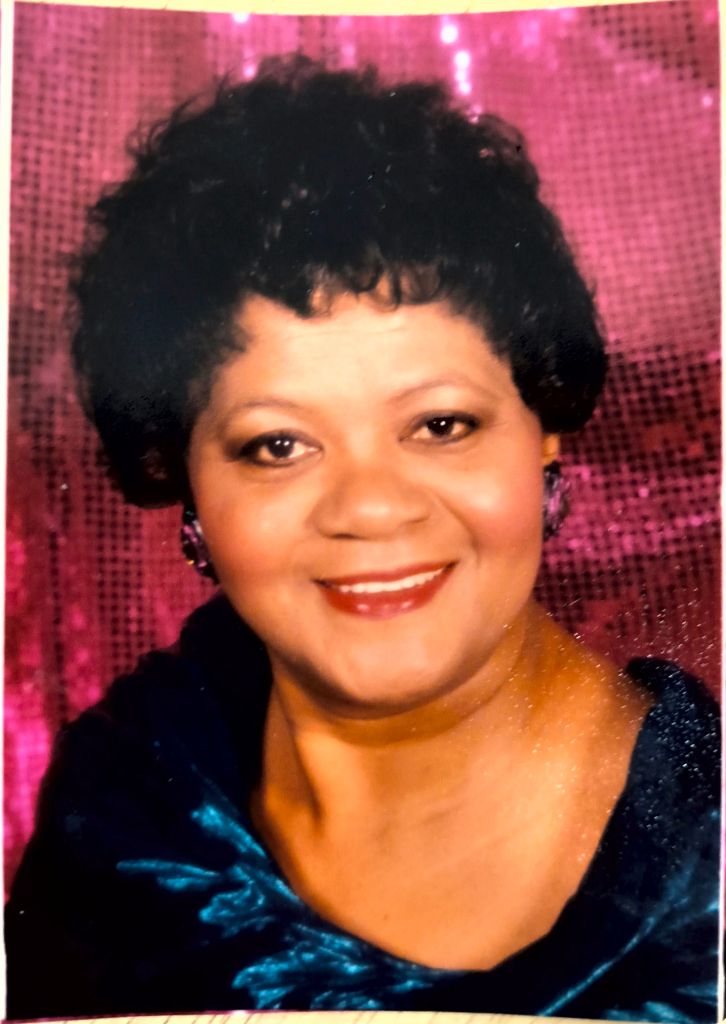
Leatha Mae Smith was born on July 7,1940 to Robert and Agnes Smith. At the time of the lawsuit she would have been 8 years old. She attended Christiansburg Industrial institute for her high school education and was a member of the first baptist church in Pulaski serving as a member of the usher board, pasters aid, and a missionary. She worked at Radford Arsenal in her adult years. She married Bernice Williamson in 1958 and together they had Rosa Williamson Wright.
Cross with Red Sash
The symbol of the cross with the Red Sash stitched onto the Smith family square honors Leatha Mae Smith’s role as a member of First Baptist Church on Magazine Street. There she served as a member of the usher board, a paster’s aid, and a missionary. Leatha Mae’s commitment to her faith, church, and community shows the strong family values of the Smith family such as community, faith, and service. Leatha Mae’s role in the church reflects a long tradition of the Smith family as many members of the family were heavily involved in the their local church.
First Baptist Church
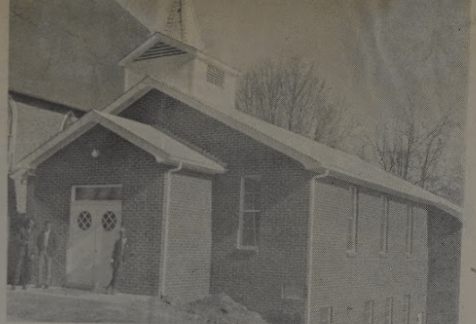
This is a picture of the First Baptist Church on Magazine Street in Pulaski, Virginia. The First Baptist Church on Magazine Street is a historically Black church that has served the Black community and the larger Pulaski community for generations. The church’s work and legacy continues to flourish today in the Pulaski community. Leatha May Williamson and other members of the Smith family were members and heavily involved with this church.
Choir
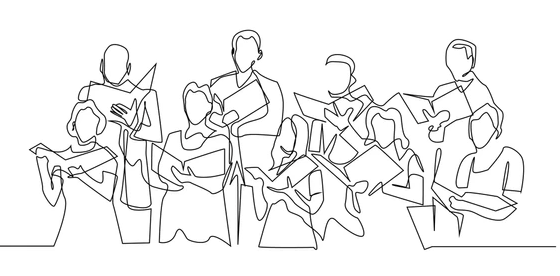
Leatha May Williamson was a part of the choir at the First Baptist Church on Magazine Street. Gospel music has played a pivotal role in the cultural heritage of Black Americans. Before Black gospel music, there was the category of Negro spirituals—religious folk songs associated with enslaved Black Americans.10 The shift from Negro spirituals to gospel music became evident in recorded music from the 1930s and 1940s.11 In Pulaski, there were a number of popular black local choir groups such as the Traveling Ten and Stars of Faith. These local choir groups made significant impact within Pulaski’s black community as memories of singing in, or listening to these passionate and beautiful voices builded community bonds and a sense of pride and joy.
Bernice Smith
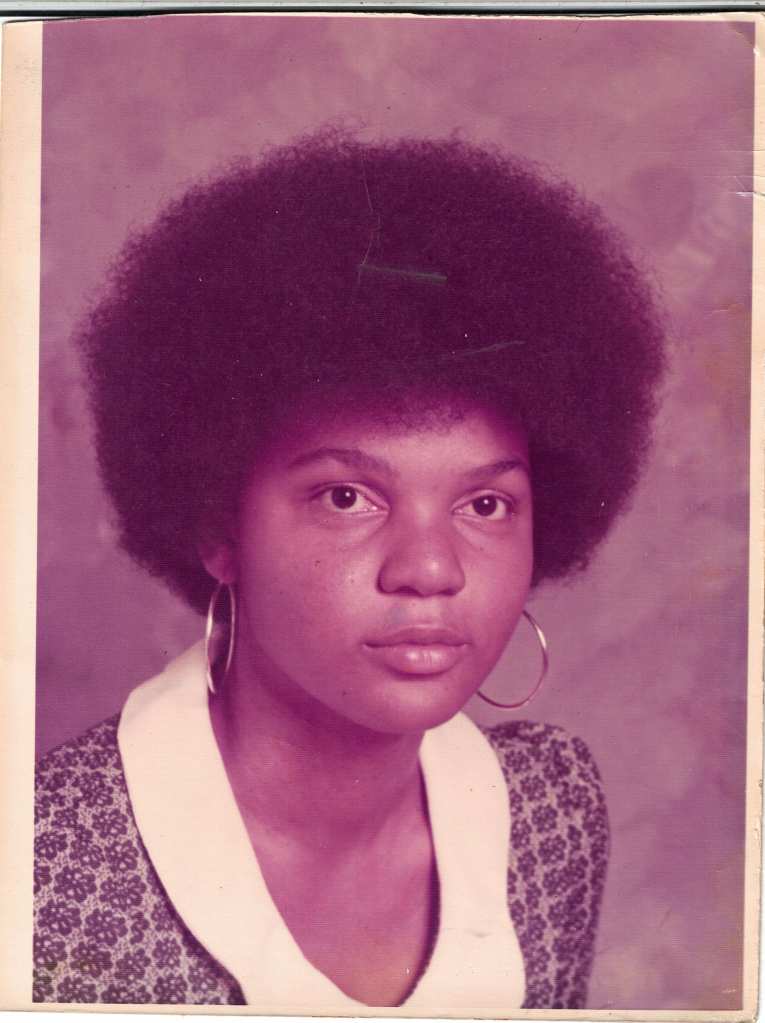
Ms. Bernice Estelle Smith Ramey was born on March 27, 1953 in Pulaski, Virginia to Robert and Agnes Smith. Bernice attended school in Pulaski, Virginia and graduated from Pulaski County High School. She worked and retired after 38 years at Pulaski Furniture Corporation. Bernice was a lifelong member of First Baptist Church on Magazine Street, Pulaski, Virginia where she ushered and could often be overheard asking others how she was doing. She loved her church and church family and tried to attend anything taking place at her church or other churches where First Baptist was invited. Bernice had several nicknames and “Meanic” was one of the more frequently used by members of her immediate family. She possessed a curious, almost mischievous smile and laugh that may have been the source of this nickname. Bernice was soft spoken, but with no hesitation she would let you know her opinion and feelings on whatever topic she was discussing with you.
Joy Smith
Joy Smith is the niece of Richard Smith, and sibling to Guy and Robert Smith III (Tink).
Police Badge
Joy Smith of the Smith family was a corrections and police officer in the Pulaski County area. The police badge symbolizes Joy’s contributions to law enforcement.
William Smith
Hammer
The hammer line drawing on the Smith family square was included to symbolize William Smith’s dedicated work in construction.
Oscar Smith
Handicap Symbol with Wheelchair
Oscar Smith was an orderly in a hospital; we used this symbol to honor his career and highlight the compassion and dedication required for his work.
Orderlies in hospitals tend to be lower-paid and lower-status positions. In the 1950s, hospital discrimination was rampant in the United States. This discrimination was evident in the denial of privileges to Black staff and the refusal to allow Black Americans to apply for nursing and residency training programs. Despite these barriers, Oscar Smith persevered in his position as an orderly, demonstrating resilience in the face of systemic discrimination.12
Nina R. Smith
Caduceus
Oscar Smith’s daughter Nina R. Smith graduated in 1980, successfully completing basic and advanced individual training in her military occupational specialty as a medical specialist in Texas and Missouri. Despite a history of segregation and sexism by the U.S. government, Black women have historically served their country during times of need. For example, during World War II, many African American women were turned down as candidates for the Women’s Army Corps. Those who were accepted still faced discrimination within the military. Black women in the Auxiliary Corps were placed in separate companies from white trainees, including segregated lodging, dining, and recreational areas.13
- “Christiansburg Institute.” Virginia Center for Civil War Studies, Virginia Tech. Accessed May 13, 2025. https://civilwar.vt.edu/programs/drivingtour/christiansburginstitute.html ↩︎
- “It Can Hardly Be Denied: Corbin v Pulaski County School Board.” Virginia Humanities. Accessed May 13, 2025. Accessed https://edu.virginiahumanities.org/experiences/it-can-hardly-be-denied-corbin-v-pulaski-county-school-board/ ↩︎
- Brooks, Jerry. “Paving the Way: The Impact of Black Contractors on the Construction Industry.” Linkedin.com. February 18, 2023. Accessed https://www.linkedin.com/pulse/paving-way-impact-black-contractors-construction-jerry-brooks-j-d-/ ↩︎
- “Celebrating Black History through Fishing.” Take Me Fishing. February 4, 2025. Accessed https://www.takemefishing.org/blog/february-2025/celebrating-black-history-through-fishing/ ↩︎
- Waldrep, Megan. 2024. “Black Fishermen Are the Cornerstone of America’s Commercial Industry – but Where Are They Now?” February 11, 2024. https://meganwaldrep.com/black-commercial-fishermen/ ↩︎
- Dean, Amanda. 2024. “First Black Students to Attend Pulaski High School.” Calfee Center. February 4, 2024. Accessed https://calfeeccc.org/calfee-connect/first-black-students-to-attend-pulaski-high-school ↩︎
- Commonwealth of Virginia, Certificate of Death for Robert Lee Smith Sr. Record Filed March 23, 1970. Accessed on Ancestry.com ↩︎
- Bamford, Tyler. 2020. “African Americans Fought for Freedom at Home and Abroad during World War II.” The National WWII Museum | New Orleans. February 1, 2020. Accessed https://www.nationalww2museum.org/war/articles/african-americans-fought-freedom-home-and-abroad-during-world-war-ii ↩︎
- “Radford Army Ammunition Plant.” 2025. Accessed https://www.jmc.army.mil/Radford/History.aspx
↩︎ - “Musical Styles | Articles and Essays | the Library of Congress Celebrates the Songs of America | Digital Collections | Library of Congress.” The Library of Congress. 2015. Accessed https://www.loc.gov/collections/songs-of-america/articles-and-essays/musical-styles/ritual-and ↩︎
- “Ritual and Worship | Musical Styles | Articles and Essays | the Library of Congress Celebrates the Songs of America | Digital Collections | Library of Congress.” The Library of Congress, Washington, D.C. Accessed https://www.loc.gov/collections/songs-of-america/articles-and-essays/musical-styles/ritual-and-worship/african-american-gospel ↩︎
- Reynolds, P. Preston. “Professional and Hospital DISCRIMINATION and the US Court of Appeals Fourth Circuit 1956–1967.” American Journal of Public Health 94 (5): 710–20. https://doi.org/10.2105/ajph.94.5.710. ↩︎
- Jared, Chamberlin. “African American Women in the Military during WWII.” The Unwritten Record. March 12, 2020. Accessed https://unwritten-record.blogs.archives.gov/2020/03/12/african-american-women-in-the-military-during-wwii/ ↩︎
 23/54 PROJECT