
Steger
Harry and Ossie Steger built a close-knit family in Pulaski County, remembered for their devotion to Christian faith, strong family bonds, and the gatherings that brought multiple generations together. In 1947, Harry signed five of their daughters—Frances, Margaret, Jean, Harrietta, and Peggy—onto the Corbin et al. v. County School Board of Pulaski County (1947) lawsuit, joining other Black families in the fight for equal education. The Stegers maintained deep ties to their land and to the railroad that ran near their home, working their farm at a time when Black landownership demanded resilience and determination. Their legacy continued through descendants like Peggy Steger Meadows, who married Arthur Lee Meadows—the first African American elected to the Pulaski Town Council—and together they became influential civic leaders in their community. Across generations, the Steger family is remembered for their faith, unity, and lasting commitment to uplifting one another.
Explore the quilt by clicking on the various elements
For best user experience, use full screen mode
An interactive graphic of the quilt square. The linked information can also be found below.
The photographs and line drawings on the Steger quilt represent the many essential elements of the Steger family’s lives coming together to form the Steger family. The Steger family is devoted to their Christian faith, ideals, and family lifestyle. The quilt also highlights fond memories of family togetherness, the history of the land and railroad near the family’s residence, and the continuing legacy of Christian faith and togetherness in the Steger family for generations.
Learn More About the Steger Family
Steger Family Artifacts
Named Participant List
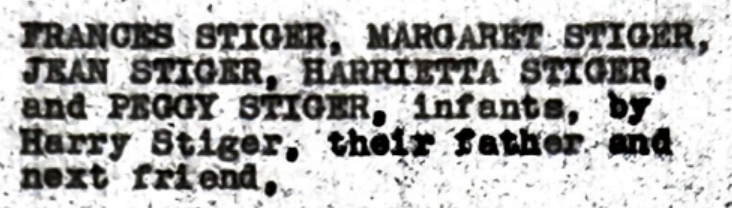
Frances Steger, Margaret Steger,
Jean Steger, Harrietta Steger,
and Peggy Steger, infants, by
Harry Steger, their father and next friend
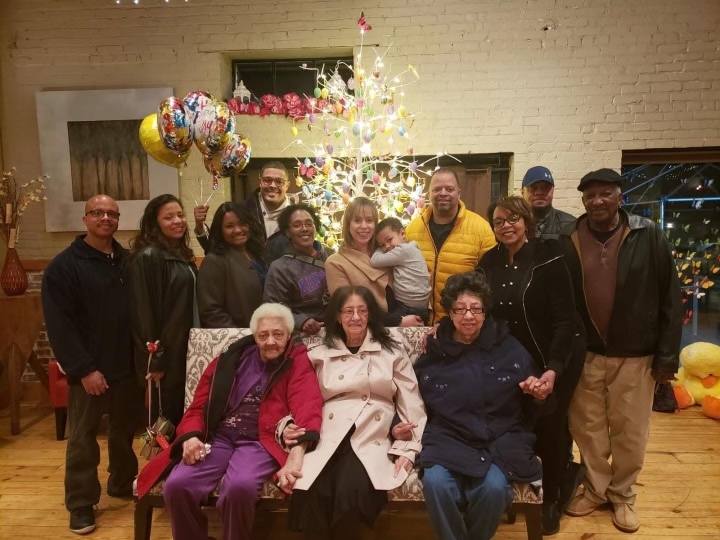
Steger Family Photo from Jean Steger’s Birthday Party
Symbolizes the importance of family gatherings and togetherness carried out through the generations of the Steger family, a family with close familial bonds and connections that strengthen over the generations. This photo was taken at Jean Steger’s Birthday party in 2021. Seated on the couch, in the foreground of the photo, are three of the Steger sisters, (from left to right) Peggy, Jean, and Harrietta.
Family Photos of the Steger Family

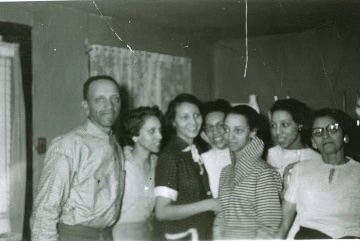
Peggy Joyce Steger Meadows
Summary
Peggy Joyce Steger was born on January 8, 1934 to parents Harry and Ossie Steger. Peggy attended elementary school in Draper and went onto Christiansburg Industrial Institute where she graduated in the early 1950s. In 1962, Peggy married Arthur Lee Meadows of Pulaski, the couple was married for 62 years.1 Arthur Lee Meadows was an incredibly influential figure in Pulaski as the first African American elected to the Town Council. Together the couple participated actively in local politics. In 1972, Peggy is listed in The Southwest Times as a county democrat who was selected to serve as a delegate in the district convention. At the district convention, 72 delegates met to choose a democratic candidate for the House of Representatives.2 Peggy and Arthur’s commitment to civic participation is noteworthy as they broke racial barriers in their community, leaving a lasting legacy of strong leadership and determination. Peggy passed away in October of 2024 and Arthur in February of 2025.
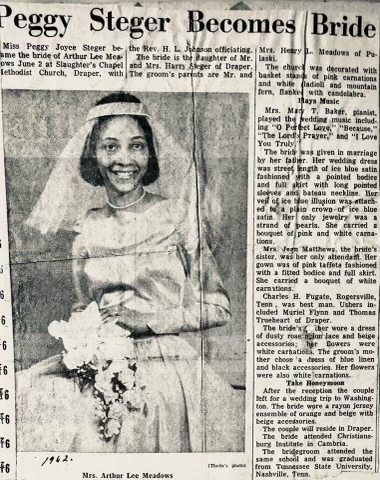
Peggy’s Wedding Photo
Peggy Steger Meadows, pictured on her wedding day, married Arthur Lee Meadows on June 2, 1962, at Slaughter’s Chapel Methodist Church in Draper. Rev. H.L Johnson officiated the wedding. The Southwest Times reported on the start of this lasting union, writing extensively about the attire of the attendees. The newspaper wrote eloquently about Peggy’s extravagant wedding ensemble, writing that, “her wedding dress was street length of ice blue stain fashioned with a pointed bodice and full skirt with long pointed sleeves and bateau neckline. Her veil of ice blue illusion was attached to a plain crown of ice blue satin. Her only jewelry was a strand of pearls.” The photo of the stunning bride is featured prominently in this article, which have included on the quilt.
Jean Steger
Summary
Irma Jean Steger was born on February 28, 1932 to parents Harry and Ossie Steger.3 Jean attended Christiansburg Institute, graduating in 1950.4 Jean was the third eldest daughter who signed onto the Corbin et al. v. County School Board of Pulaski County, VA. et al. (1947) lawsuit.
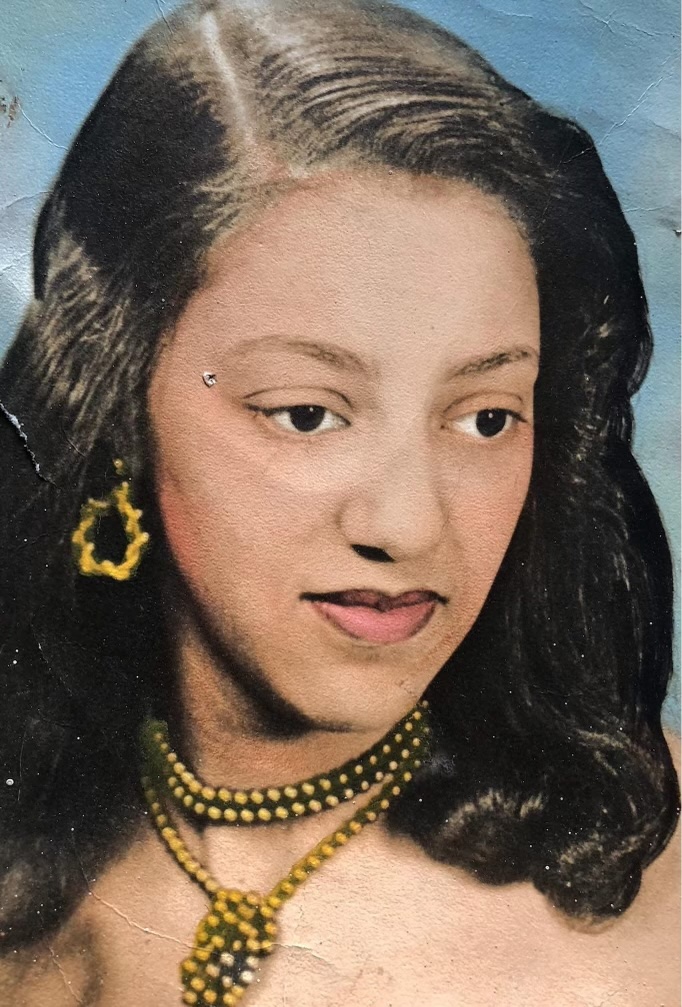
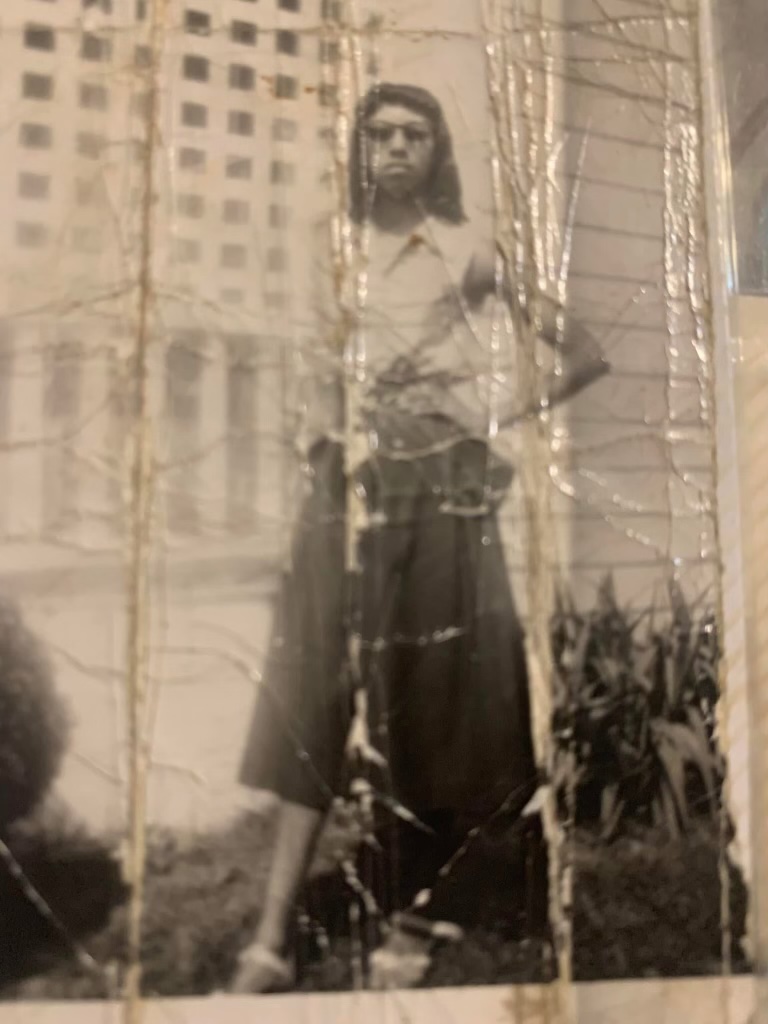
“Big Ma” Ossie Steger
Summary
Ossie Miller Steger was born on January 20, 1912 in Wythe County to parents Charles and Laura Reeves Miller.7 Ossie was one of 10 Miller children with six sisters, Minnie, Ruth, Clara, Beulah, Virginia, and Bertha and three brothers Joseph, Lonnie, and William.8 Ossie went on to have a large family of her own. She married Harry Lewis steger and the couple had five daughters Frances Johnson, Margaret Claytor, Jean Tinner, Peggy Meadows, and Harrietta Saunders. Ossie Miller Steger lived a long life, passing away in October of 1999, leaving behind several grandchildren to cherish her memory. 9
Picture of “Big Ma” Ossie Steger on the Steger Family Farm
Our nation’s history reflects the many barriers to land ownership and financial independence for Black farmers due to widespread racial discrimination. Sharecropping and discriminatory New Deal policies perpetuated generational debt, making it harder for Black farmers to thrive. However, Black farmers began to use their ingenuity and resilience to form cooperatives and support their community. By 1954, 129,854 non-white farmers in the South wholly owned and operated their farms.10 Ossie was raised, alongside her siblings, on a farm in Allisonia, relocating to Draper when she married Harry. This photo was likely captured on her family’s farm.

Pound Cake Line Drawing
Line drawing of a pound cake, as it was a family favorite. The Stegers have fond memories of eating the family’s recipe for pound cake during holidays and other special occasions.
Food has always been much more than food in Black households and communities. Food represents an opportunity to bond, connect, and share traditions with younger generations. Black Americans share a rich culinary history that has followed them. Many traditional foods in black homes stem from times of economic hardship, incentivizing cooks to create the most economical food that could be made cheaply and yield high results. Food also created an opportunity for expression among Black Americans, as they could blend West African dishes with Western dishes, creating a uniquely Black American cuisine.11
Methodist Church
Represents the Steger family’s devotion and love for the Christian faith and church activism.
Heart
The heart symbolizes the importance of love and caring in the family. The heart is connected to all the pictures of the Steger sisters. The Steger family, especially the Steger sisters, had a deep sense of love and care for each other. This heart and all the other motifs on the quilt can only represent a fraction of the love and familial bond found in this family.
Railroad Tracks
Before the Civil War, almost every railroad built in the American South was constructed using slave labor. During the Civil War, the U.S. Military Railroads Department employed many African Americans to support Union efforts in transporting goods to the North.12
After emancipation, the South struggled economically and needed to rebuild during Reconstruction. The South was accustomed to free labor, so it turned to cheap convict labor to build railroads. Depending on the area, the majority of these convicts could be Black. The work involved in this labor was often dangerous and exposed workers to harmful chemicals. 13
Although almost no records exist, historians are confident that Black workers directly contributed to completing the Transcontinental Railroad. The railroad tracks have multiple meanings for the Steger Family, such as “Big Daddy” Harry Steger, who worked for the Norfolk & Western Railway. The railroad was close to the Steger Family farm and community.
Philippians 4:13
This is an inspirational and powerful bible verse for the Steger family, both past and present: “I can do all things through Christ who strengthens me.” This verse echoes the Steger family’s belief that faith in Christ empowers them to face any challenge through God’s strength.
Sources
- “Obituary: Peggy Joyce Meadows.” The Patriot. Pulaski. October 1, 2024. https://pcpatriot.com/peggy-joyce-meadows/. ↩︎
- Williams, Esther. “73 Democrats Selected to District Convention. ↩︎
- Warren Thomas Tinner and Irma Jean Matthews. Marriage Certificate. File no. 88016312. Commonwealth of Virginia Department of Health-Division of Vital Records. Pulaski. April 4, 1988. Accessed Ancestry.com. ↩︎
- “Pulaski Graduates of Christiansburg Institute.” The Southwest Times. Pulaski. June 6, 1950. Page 6. Accessed Virginia Chronicle Library of Virginia Digital Newspaper Archive. ↩︎
- Hamilton Douglas Saunders and Geraldine Harriett Murphy. Marriage Certificate. File no. 70034297. Commonwealth of Virginia Department of Health-Bureau of Vital Records and Health Statistics. Pulaski. August 28, 1970. Accessed Ancestry.com. ↩︎
- Find a Grave. Memorial page for Geraldine Harrietta Stigger Saunders. Memorial ID 280395719. Maintained by Sue Ratcliff Blackwell. Accessed December 5, 2025. https://www.findagrave.com/memorial/280395719/geraldine-harrietta-saunders. ↩︎
- “Area Deaths: Ossie Miller Steger.” The Southwest Times. Pulaski. October 18, 1999. Page 2. Accessed Virginia Chronicle Library of Virginia Digital Newspaper Archive. ↩︎
- “Colored Deaths: Mrs. Laura Jane R. Miller.” The Southwest Times. Pulaski. July 14, 1956. Page 3. Accessed Virginia Chronicle Library of Virginia Digital Newspaper Archive. ↩︎
- “Area Deaths: Ossie Miller Steger.” The Southwest Times. Pulaski. October 18, 1999. Page 2. ↩︎
- “Black Farmers in America, 1865-2000 The Pursuit of Independent Farming and the Role of Cooperatives” USDA Report, October 2002, Accessed https://www.rd.usda.gov/files/RR194.pdf ↩︎
- Sahar, Lee. 2024. “Nourishing Our Nation: A Brief History of African American Cuisine.” Atlanta History Center. June 12, 2024. https://www.atlantahistorycenter.com/blog/nourishing-our-nation-a-brief-history-of-african-am. ↩︎
- “African Americans and the Railroad.” National Park Service. Accessed May 14, 2025. https://www.nps.gov/grsm/learn/historyculture/african-americans-and-the-railroad.ht ↩︎
- Gatlinburg, Mailing Address: 107 Park Headquarters Road, and TN 37738 Phone: 436- 1200 Contact Us. 2022. “African Americans and the Railroad – Great Smoky Mountains National Park (U.S. National Park Service).” http://Www.nps.gov. November 28, 2022. https://www.nps.gov/grsm/learn/historyculture/african-americans-and-the-railroad.htm. ↩︎
 23/54 PROJECT