
Thomas
The Thomas family was highly respected within the Black community of Pulaski because of their presence in their church and the local schools. Essential values carried on through generations of the family included faith, selflessness, compassion, and the significance of education. The overall design of the quilt places a high emphasis on the family’s Christian values and commitment to the Methodist church, as their religion was a constant part of life that multiple generations of the family valued.
Explore the quilt by clicking on the various elements
For best user experience, use full screen mode
An interactive graphic of the quilt square. The linked information can also be found below.
Learn More About the Thomas Family
Artifacts by Theme
The Lawsuit
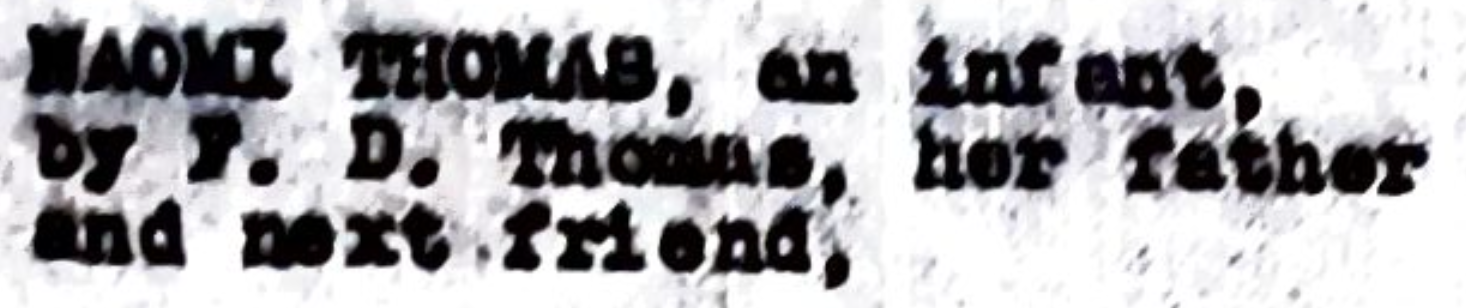
In 1947, along with 23 other families, Reverend F.D. Thomas signed his daughter Naomi Thomas onto the Corbin et al. v. County School Board of Pulaski County, VA. et al. case. As a father who prioritized his children’s education and their opportunities to succeed and grow academically, F.D. Thomas attached his and his daughters name to the civil rights case even at a time where it could have been dangerous to do so. While designing the Thomas quilt square, it was important to highlight the lawsuit itself as a way to commemorate the courageous and difficult decision of signing onto a civil rights court case in the 1940’s. The African American community in Pulaski Virginia came together to challenge the status quo of “separate but equal” schools and brought light to the lack of equality within these separated spaces in a time before the US civil rights movement was in full swing. The Thomas family played a key roll as one of the many families who signed onto the lawsuit as F.D. Thomas was a man with many connections and respect among the Black community in Pulaski and a man held highly within religious spaces among local churches in Pulaski.
Artifacts by Family Member
Reverend Fred Douglas Thomas
Summary
Reverend Fred Douglas Thomas Sr. was born on July 28,1891 in Hemlock, North Carolina to parents Joseph Thomas and Elsie Ann Wall.1 He married Hazel Moss Thomas in 1926 in Mcdowell County, West Virginia. 2 On October 26, 1917, F.D. Thomas was enlisted in the US military to fight in WWI in the 2nd 367th Infantry Regiment, an all black segregated unit of the 92nd Infantry Division, until he was discharged on September 3, 1918.3 From as early as the 1930s, F.D. Thomas was a Minister within the Methodist faith.4 He served as many different roles at multiple Methodist churches throughout his life, but he finished his career at the New Century Methodist Church in Pulaski as a Minister. He had one son, F.D. Thomas Jr. and three daughters, Rebecca, Naomi, and Ruth Thomas with Hazel Thomas.5
Symbolic Representation
Photo of Reverend F.D. Thomas
Reverend F.D. Thomas signed his daughter Naomi Thomas onto the 1947 Corbin et al v. County School Board of Pulaski County et al case. He was known as a selfless man who was heavily involved in his church. According to community members who remember the Thomas family, he prioritized his children’s educational experiences in many ways with the Thomas family’s involvement in the local lawsuit just being one of them. Reverend F.D. Thomas was a well respected individual of the Black community in Pulaski with major influence in the local Methodist churches and important advocate for equality among schools for the Black children of Pulaski.
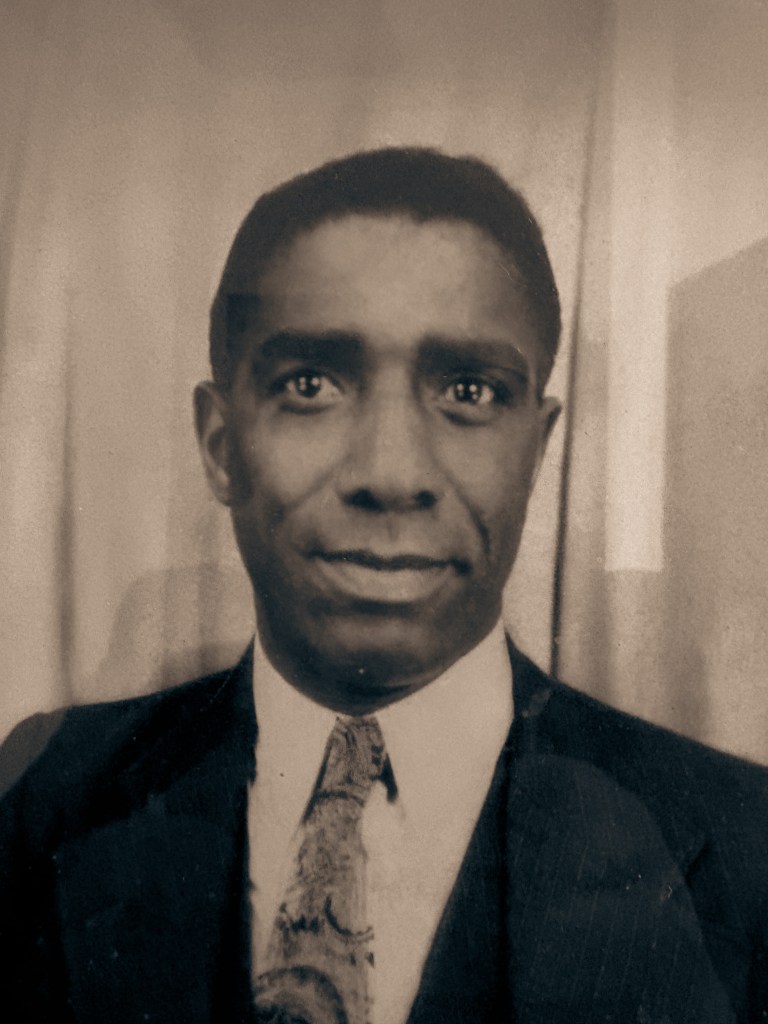
Image courtesy of the Randolph Avenue United Methodist Church of Pulaski, Virginia, and Mickey Hickman
Clerical Collar Line Drawing
Reverend F.D. Thomas was known as one of the few clergy members who wore the full Clergy collar daily. This decision displayed his commitment to his church and faith, setting a precedent for the other members regarding the importance of commitment to one’s faith and God. F.D. Thomas was a man very dedicated to his Christian faith and the United Methodist Church in Pulaski Virginia. He was a highly respected man within the church in which his dedication to the little things such as wearing his clergy collar every service he attended was one of the many aspects of his character that showed his devotion to his church and his faith.
Methodist Cross and Flame Symbol
Religion and the New Century Methodist Church were vital for the Thomas family, as Reverend Thomas instilled the importance of faith in his children. From visiting his children’s school to talk about the church to being a well respected member of the local methodist church clergy at United Methodist Church of Pulaski, Reverend F.D. Thomas prioritized his faith and religion and encouraged his children to view their faith similarly. The inclusion of the Methodist Cross and Flame symbol represents Reverend F.D. Thomas’s work in the Methodist Church and the family’s connection to the Christian Faith. The Methodist Cross and Flame symbol is placed centrally on the block design to show its overwhelming impact the Methodist church had in the lives of the Thomas family and how faith was the center focus of their lives.
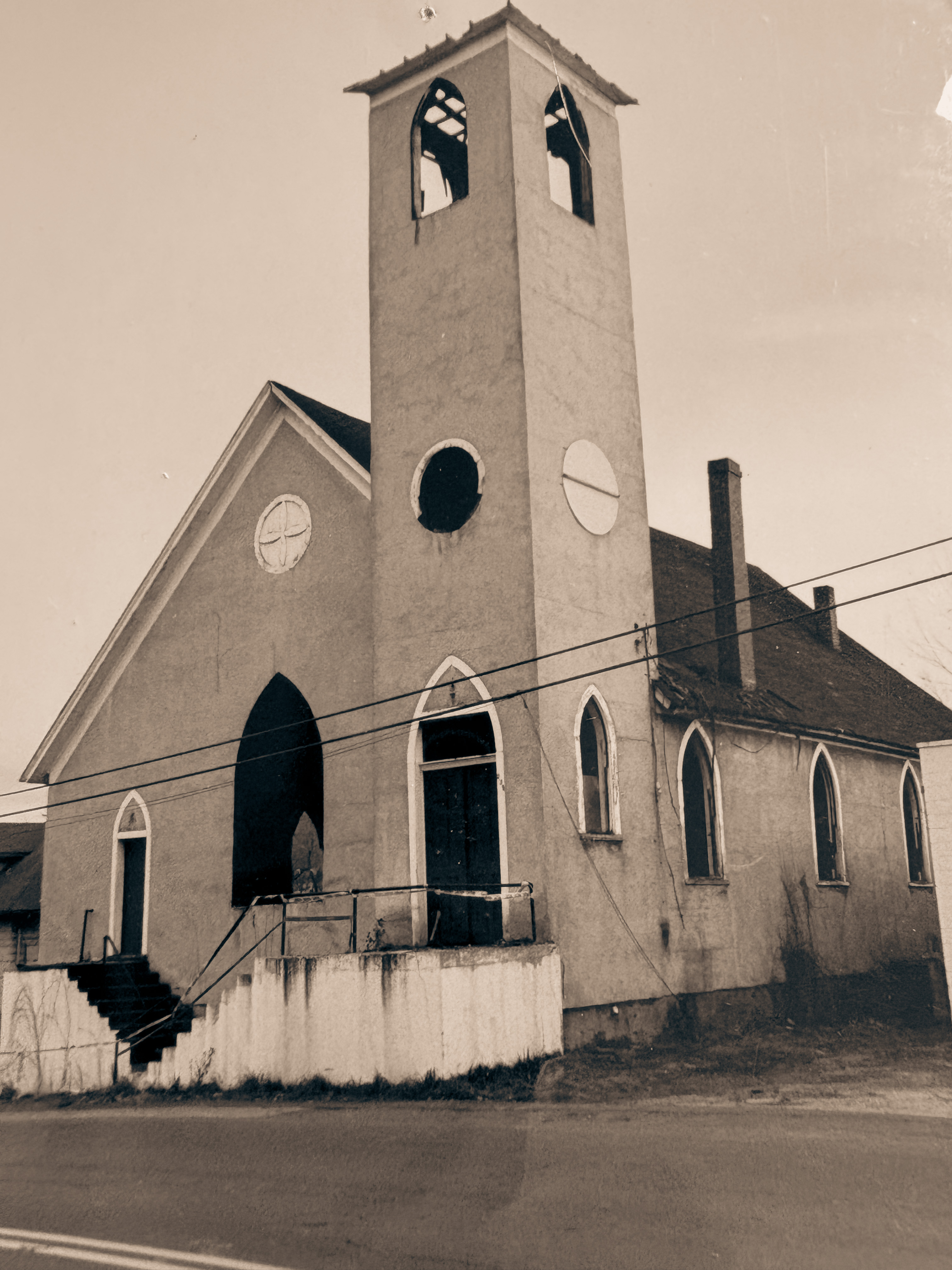
United Methodist Church of Pulaski,
Virginia, and Mickey Hickman
New Century Methodist Church of Pulaski
For decades, Reverend F.D. Thomas was a pastor at New Century Methodist Church in Pulaski, Virginia. The New Century Methodist Church was a significant place for F.D. Thomas and his children. Reverend Thomas’s commitment to his church was incredibly admirable as it showed his commitment to his religion and church, and the importance placed on his surrounding community. Described in the Calfee Junior Pioneer in a column written by his daughter Naomi Thomas, Reverend F.D. Thomas visited Calfee in the fall of 1945 on what was described as an “Evangelistic campaign.”6 Reverend Thomas, along with five other reverends and preachers of other surrounding black churches in the area, visited the school in what was most likely an attempt by the community to encourage youth to get excited about and involved in the Christian faith. The church itself was a pillar for the black Methodist community since its founding in 1900 on West Main Street of Pulaski, as it served as one of the oldest and biggest Methodist congregations for decades for the black community in Pulaski. While the Church is no longer standing, the New Century Methodist Church’s legacy lives on within the families who attended the church through the lessons learned and community built inside its walls, as a member and a Reverend of the New Century Methodist Church, F.D. Thomas instilled the importance of faith and community into his children by setting the example of what it means to live a life committed to God.
Naomi Thomas
Summary
Daughter of Reverend F.D. Thomas Sr. and Hazel Thomas, Naomi Thomas was born on April 24th, 1933, in Pulaski, Virginia.7 During her childhood, she attended the Calfee Training School in Pulaski, Virginia and Christiansburg Industrial Institute where she graduated from in the early 1950s. Naomi was signed onto the Corbin et al. v. County School Board of Pulaski County, VA. et al. court case in 1947 by her father F.D. Thomas Sr. After graduation, she became a nurses aid in Camden, New Jersey and married Richard Pannell on September 1, 1951, who she had three children with.8 Naomi Thomas Pannell passed away on March 13, 1963 due to a heart attack at the young age of 29.9
Symbolic Representation
The Calfee Junior Pioneer Masthead
Naomi Thomas, who was signed onto the lawsuit, and her sister Ruth Thomas were both daughters of Reverend F.D. Thomas, who attended the Calfee school in Pulaski. During their time at the school, they both were on the school newspaper staff who worked on the school’s monthly newspaper, the Calfee Junior Pioneer. The paper’s Masthead was included on the quilt to represent the two girls’ hard work and commitment to working on the Calfee School newspaper.
Nurse’s Cap
In Naomi Thomas’s adult life, she moved to Camden, New Jersey, where she worked as a nurse’s aide at West Jersey Hospital for four years. Working sometime in the 1950s and the 1960s before she died in 1963, Naomi Thomas worked as a nurse’s aide in West Jersey Hospital, which was likely desegregated at the time. While many hospitals in the South remained segregated by state law.
Millions of Black individuals and families were in search of better education, opportunities for employment, and overall better treatment. Naomi is a clear example of this movement occurring, as her departure from Pulaski, VA to New Jersey in the early 1950s in search of a hospital job is likely related to the African American Great Migration Movement, the “sixty-year period, between 1910 and 1970, during which an estimated six million African Americans voted with their feet and left the South.”10
In Pulaski County, there were not many opportunities for Black women to have a career in the medical field, which caused many women like Naomi Thomas to leave the area in search of a job. The nurse’s cap was included in the quilt design to represent Naomi’s compassionate character by working as a nurse’s aide. Being a nurse’s aide requires selflessness, physical and mental strength, and a willingness to do difficult or unpleasant tasks for the betterment of your patients. Qualities such as these represent Naomi and the entire Thomas family throughout their lives, as simple acts of selflessness and compassion stem directly from their community involvement and their faith.
Line Drawing of Three Children Reading
Naomi’s three children, Richard Jr., Debra, and Hazel Pannell, are represented at the bottom of the Quilt block in a line drawing of three children reading and learning, along with their three names written out in cursive writing next to the line drawing. F.D. Thomas placed a high importance on education in the Thomas family household, as both Naomi and Ruth Thomas graduated from Calfee Training School and Christiansburg Institute despite the many obstacles that made these feats hard, such as long commutes and unequal educational opportunities placed upon African Americans in the 1940s and 1950s. Naomi later passed down this value to her three children, instilling the same values and encouraging them to value education like she did. In many African American communities, receiving an education was highly important as it was a pathway towards personal and economic freedom. Many of the families represented on the quilt encouraged their children to take their education seriously, and if possible, go on to receive a higher education degree to further their chances of economic success. The Thomas family was no different in this trend.
Sources
- National Archives At St. Louis; St. Louis, Missouri. Records of the Selective Service System. World War II: First Registration. “Fred Douglas Thomas.” Serial Number 1250. 1942. Accessed on Ancestry.com. and Commonwealth of Virginia. Certificate of Death for Fred Douglas Thomas. March 11, 1946. File no. 7179. Pulaski, Virginia. Accessed on Ancestry.com. ↩︎
- West Virginia Marriages Index for F.D. Thomas and Hazel R. Moss.1926. McDowell, West Virginia. Accessed on Ancestry.com ↩︎
- National Archives at Washington D.C. Applications for Headstone for Fred D. Thomas. Record group no 92. Records of the Office of the Quartermaster General. Accessed on Ancestry.com. ↩︎
- Department of Commerce–Bureau of the Census. Fifteenth Census of the United States. Washington County, Virginia. Enumerated April 8, 1930. Sheet no. 8A. Entry for Fred D. Thomas. Accessed on Ancestry.com. ↩︎
- Department of Commerce–Bureau of the Census. Sixteenth Census of the United States. Pulaski County, Virginia. Enumerated April 12, 1940. Sheet no. 6B. Entry for F. D. Thomas. Accessed on Ancestry.com. ↩︎
- Thomas, Naomi. “Visitors.” The Calfee Junior Pioneer. November, 1945. ↩︎
- Virginia Delayed Birth Records. Virginia Department of Health, Richmond, Virginia. Entry for Naomi Elizabeth Thomas. April 24, 1933. Accessed on ancestry.com ↩︎
- Illinois Marriage Index. Cook County Clerk, Chicago, Il. Cook County Genealogy Records. Entry for Naomi E. Thomas. September 1, 1951. Accessed on ancestry.com ↩︎
- Courier-Post. Obituary of Naomi T. Pannell. Camden, New Jersey. March 14, 1963. Accessed on ancestry.com ↩︎
- “The Great Migration (1910-1970).” African American Heritage, June 21, 2021. ↩︎
 23/54 PROJECT